
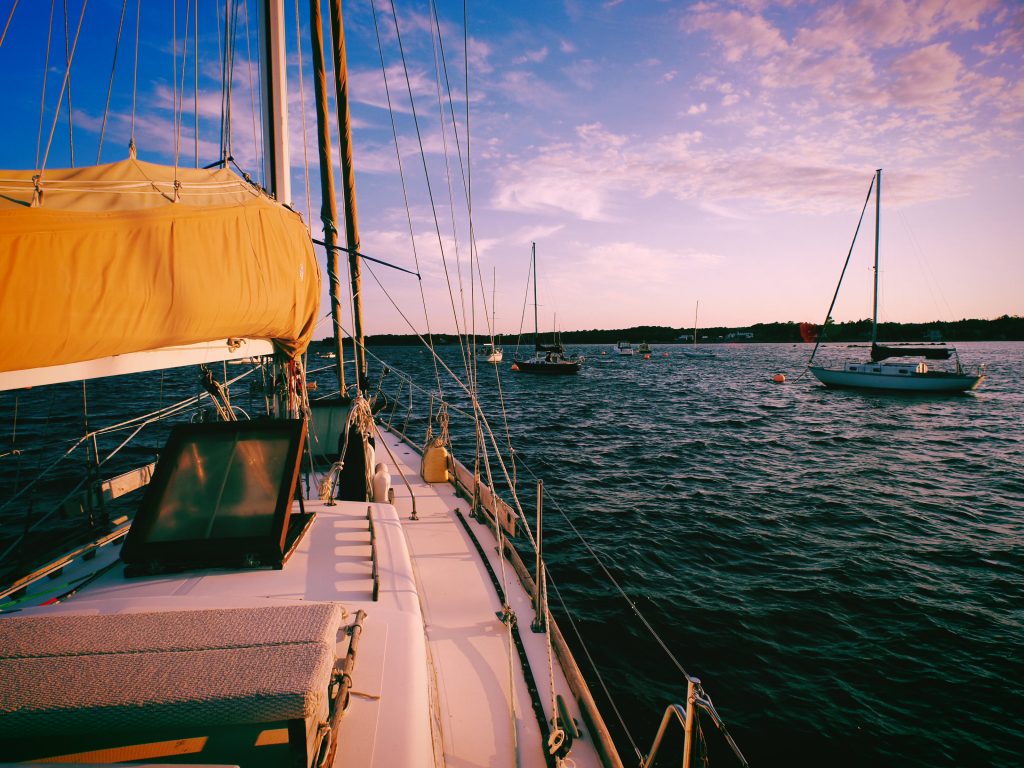
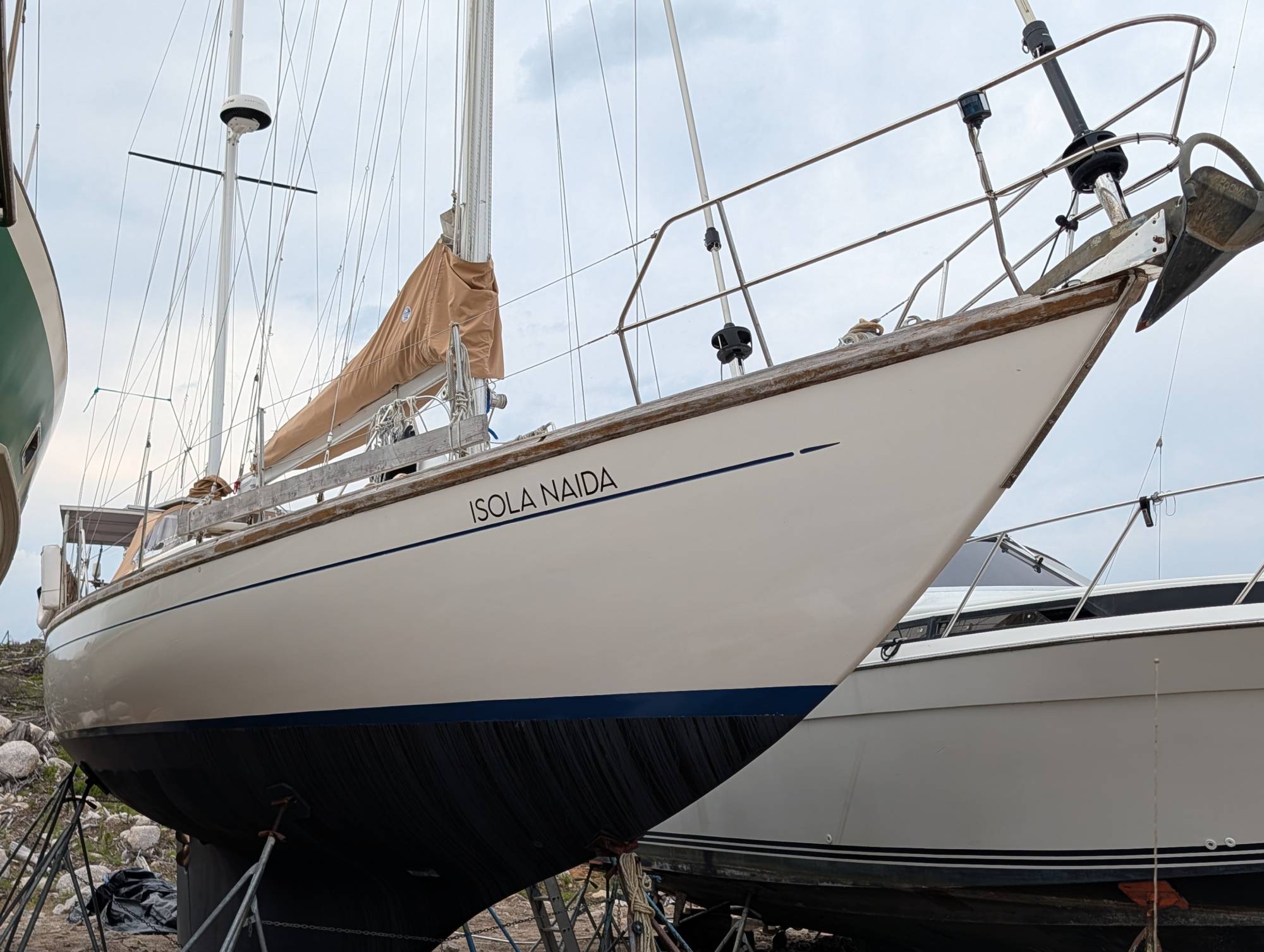
We’ve been progressing the work on Isola Naida as spring continues. Unfortunately, we haven’t been able to be consistent in executing any single project from start to finish on account of the Nova Scotia spring. We take advantage of the sunny days when we have them to progress work on Isola Naida’s new look. When the rain comes, which is often, we retreat back inside to work on mechanical systems and to find all of the leaks that we need to address when the sunny days return.
In our last post we made a list of the jobs we need to complete before Isola Naida splashes in a few weeks. This week, we’re looking at the progress made giving Isola Naida’s hull a fresh look as we head into the season.
Bottom Paint
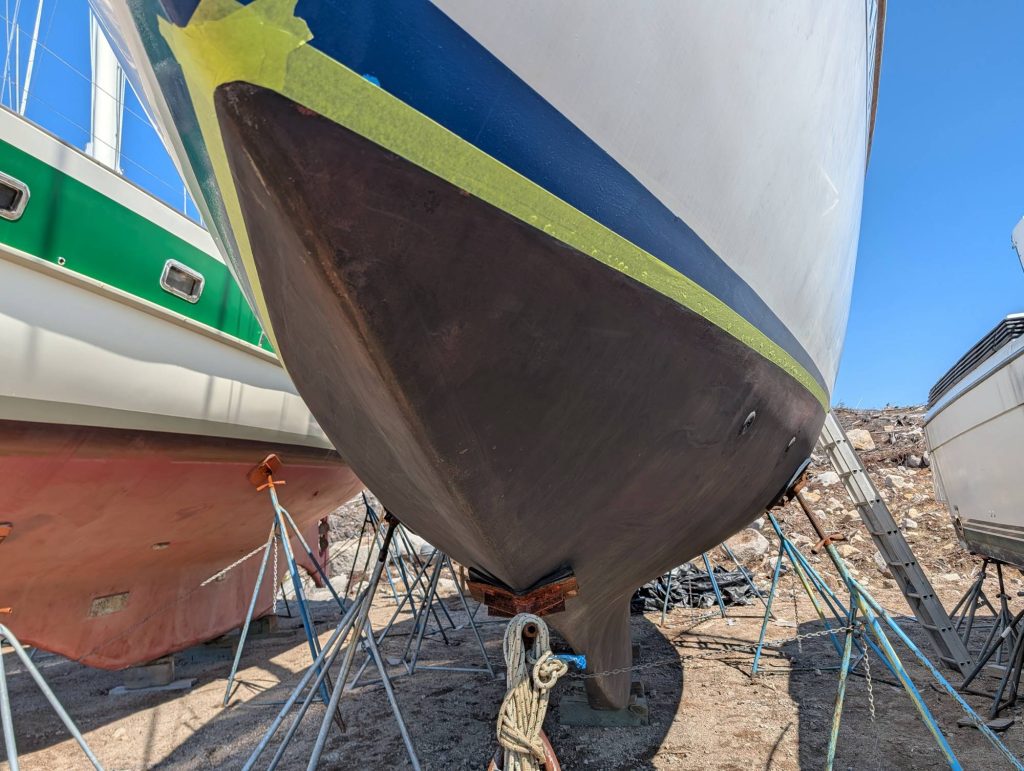
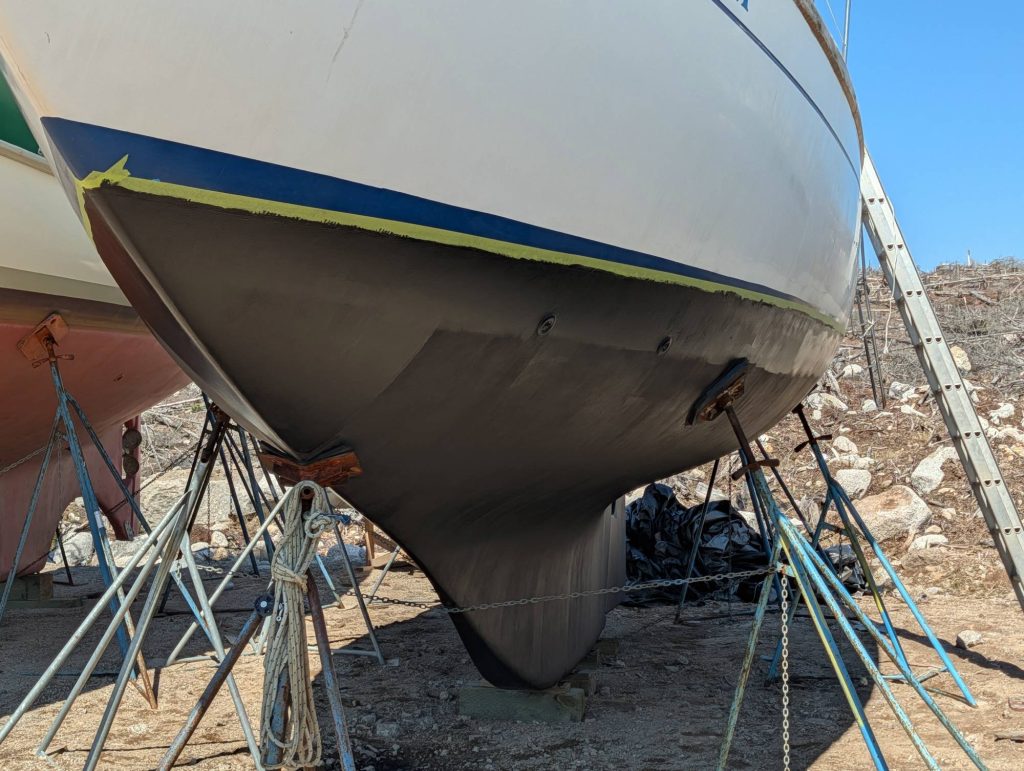
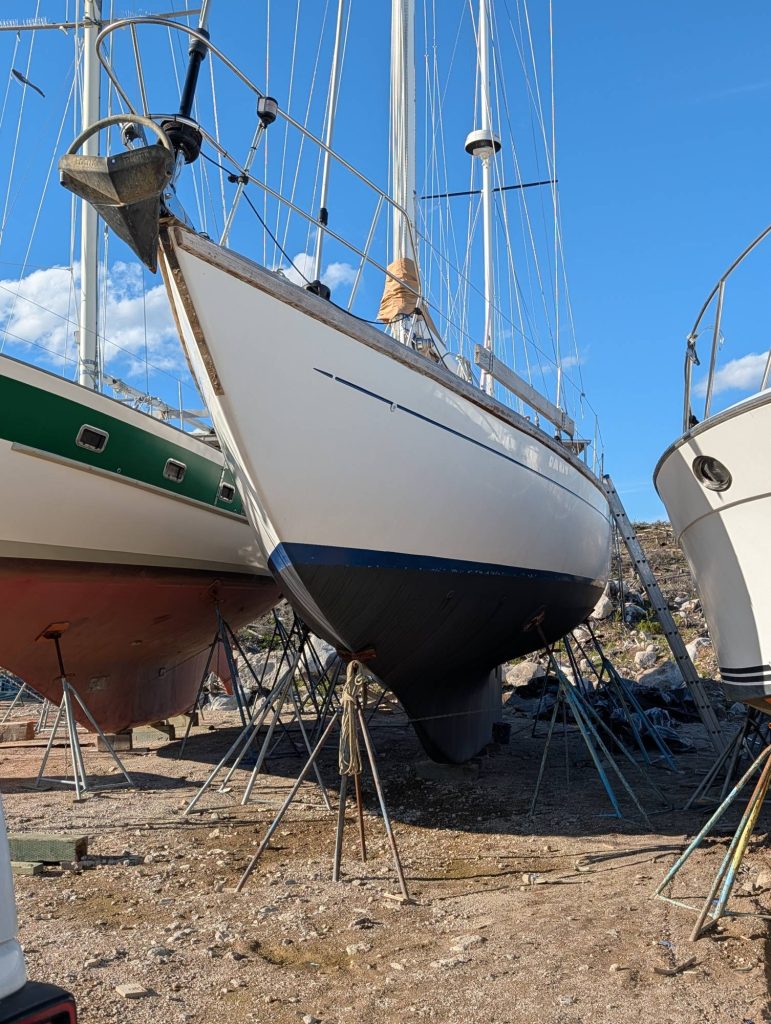
A few weeks ago, D’Arcy used painter’s tape to mask Isola Naida’s boot stripe then donned a paint suit, face mask, and gloves. Equipped with his trusty DeWalt random orbital sander and just enough 120 grit sandpaper to get through the job, he gave gave the bottom paint a thorough sanding. Isola Naida’s bottom paint was not in bad condition, though the underside of the keel lacked paint coverage. After smoothing out any uneven surfaces and giving the existing paint a consistent tooth, D’Arcy thoroughly mixed two gallons of Petit HRT Unepoxy – Black.
A full coat of fresh bottom paint was applied to the hull. High-friction areas received a second coating: the waterline, the bow, and the rudder. When we’re lifted from the stands in a few weeks, the areas that were missed will get a coat of paint before we touch the water.

Removing Old Vinyls
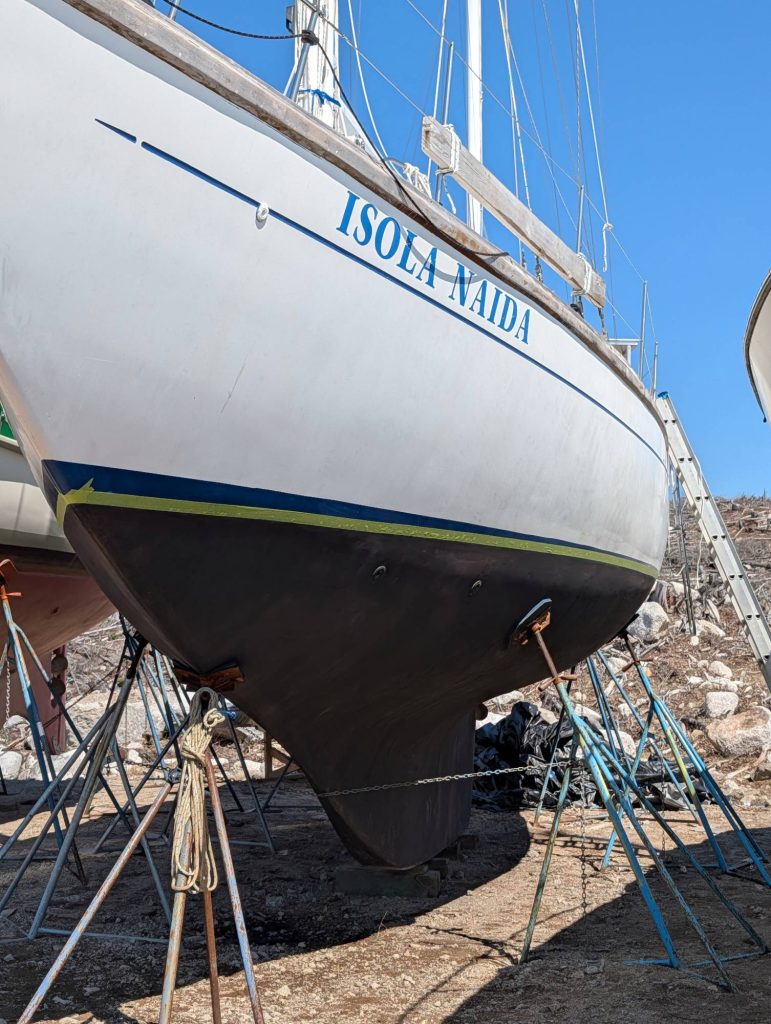
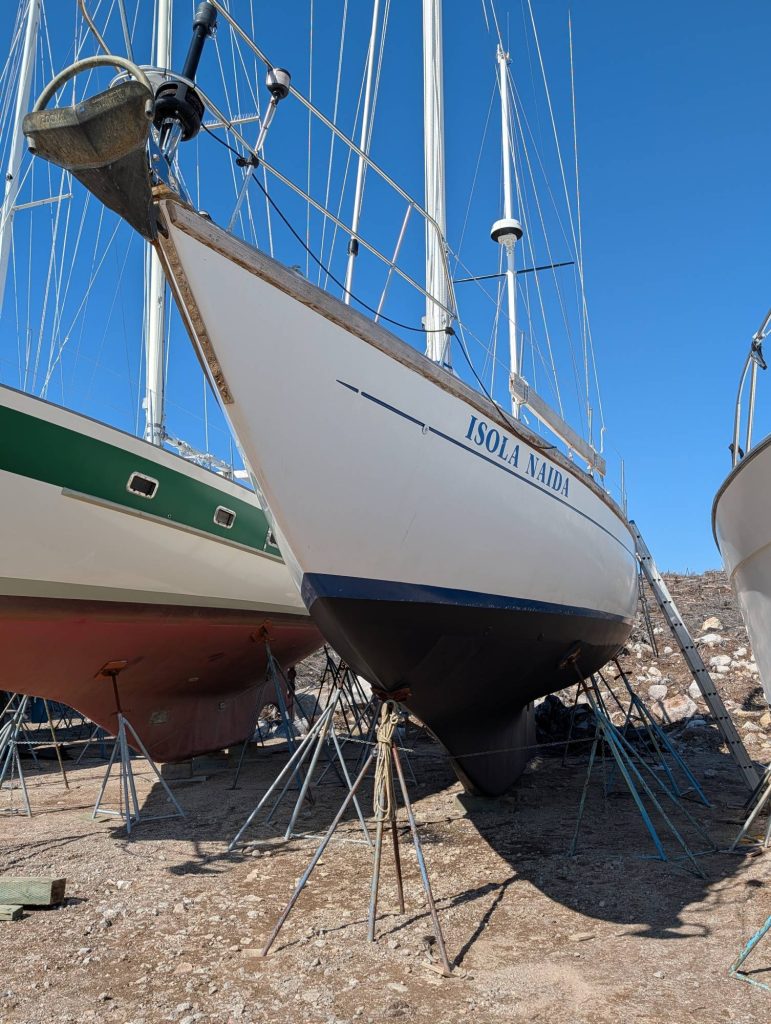
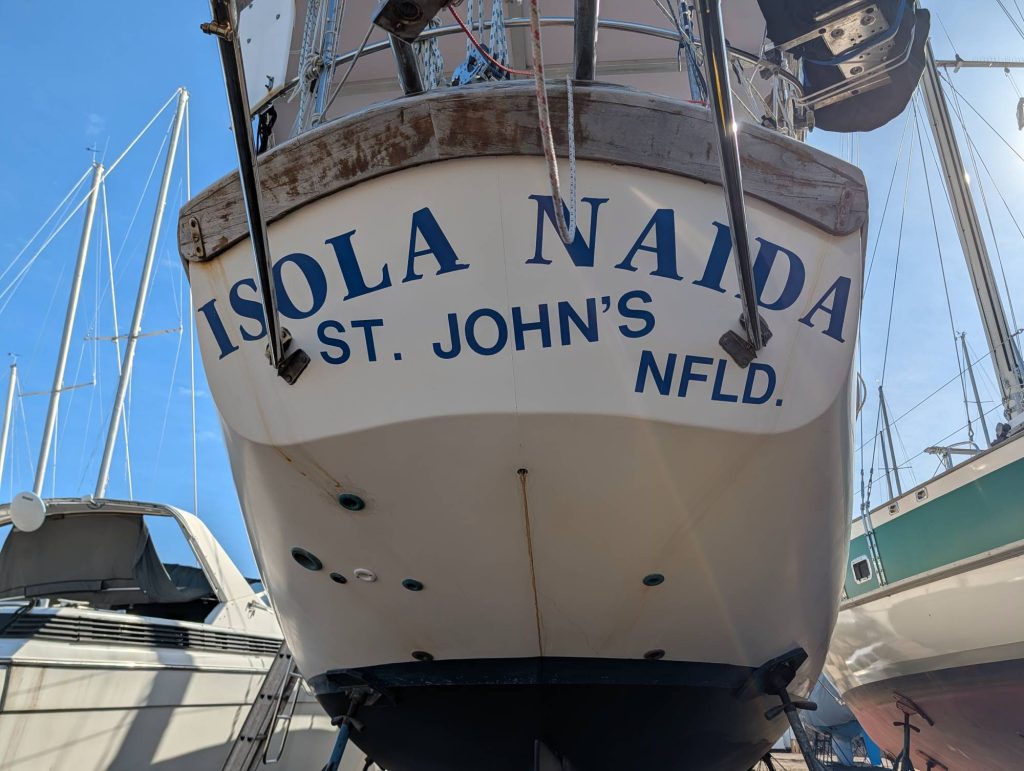
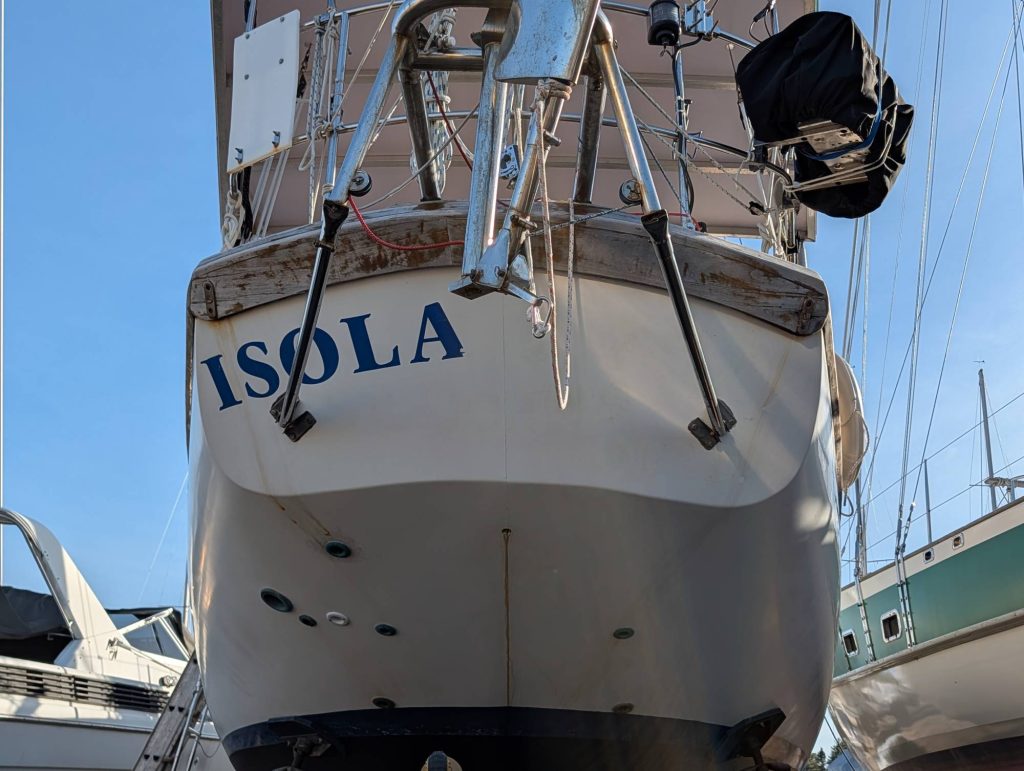
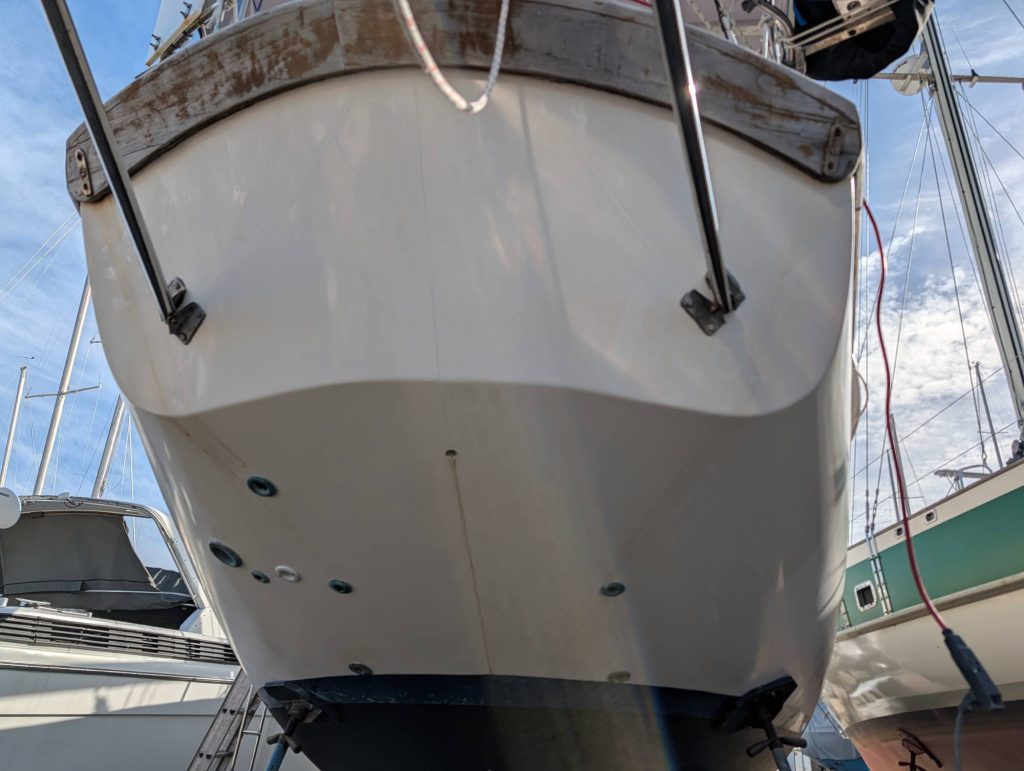
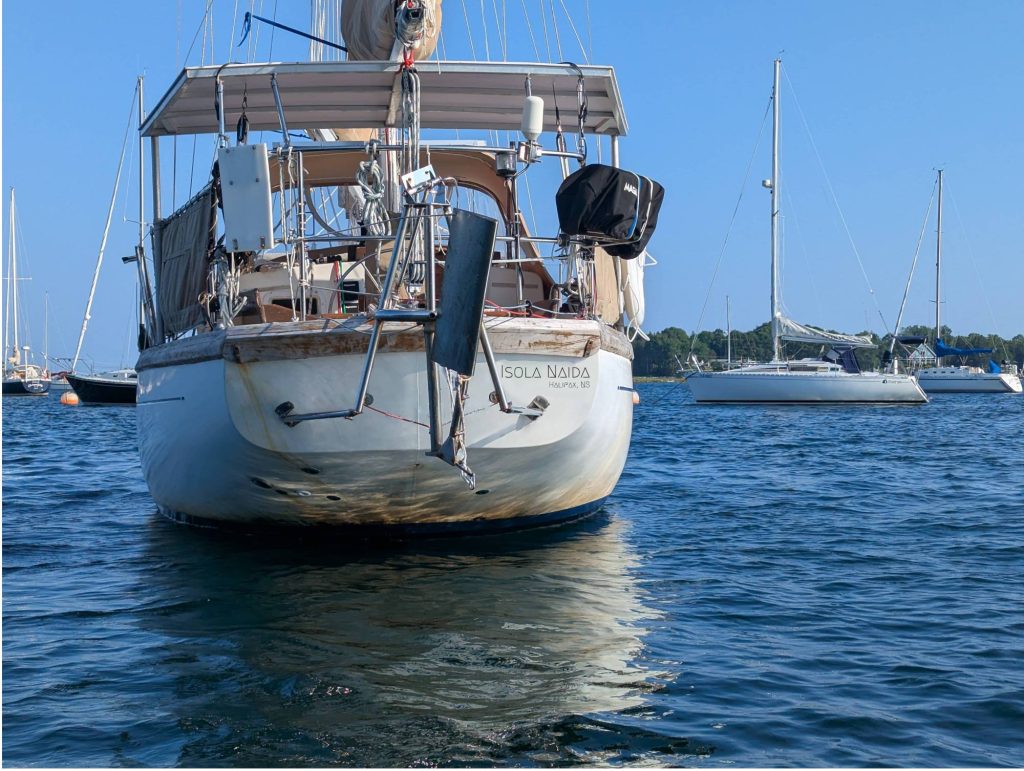
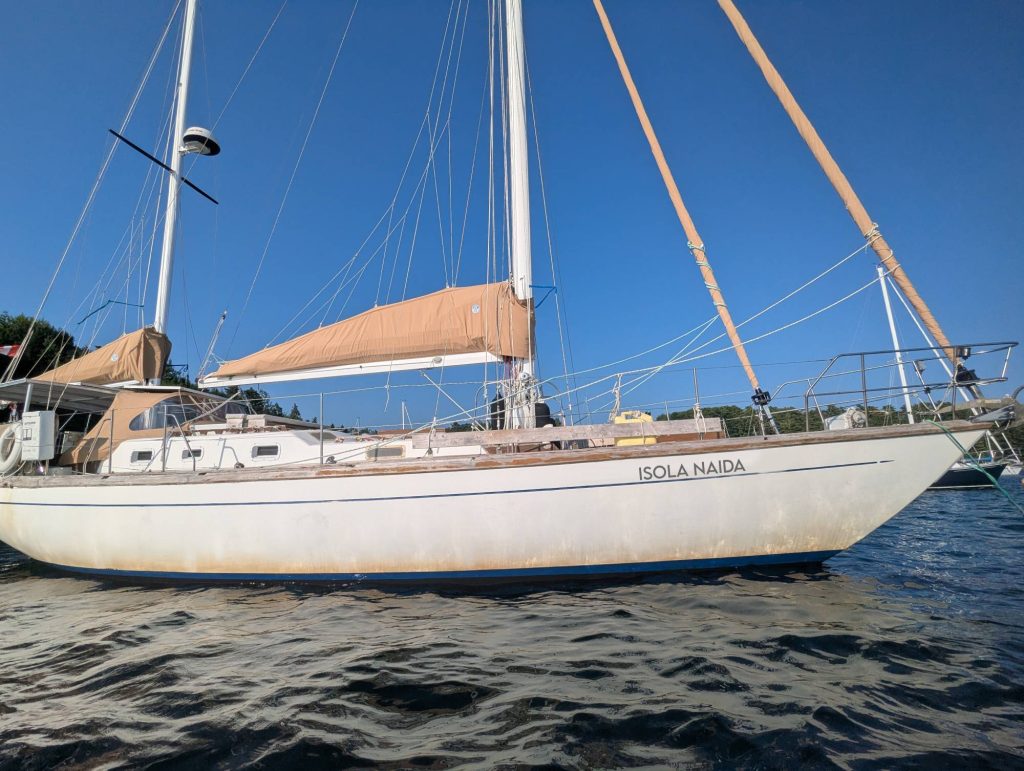
Isola Naida’s vinyl decals were aging and beginning to chip away. The large blue serif lettering was dated and bulky. We wanted to breathe some new life into Isola Naida’s appearance. When we purchased Isola Naida in July 2025, we changed her port of registry from St. John’s, Newfoundland to Halifax, Nova Scotia. We were going to have to remove some of the decals and decided this would be a good time to replace them all.
It took a few days of work dodging the rainy weather, but we eventually had all of the old vinyl removed. The adhesive was persistent, but nothing that acetone and a microfiber cloth couldn’t handle with a little bit of elbow grease.
New Vinyls
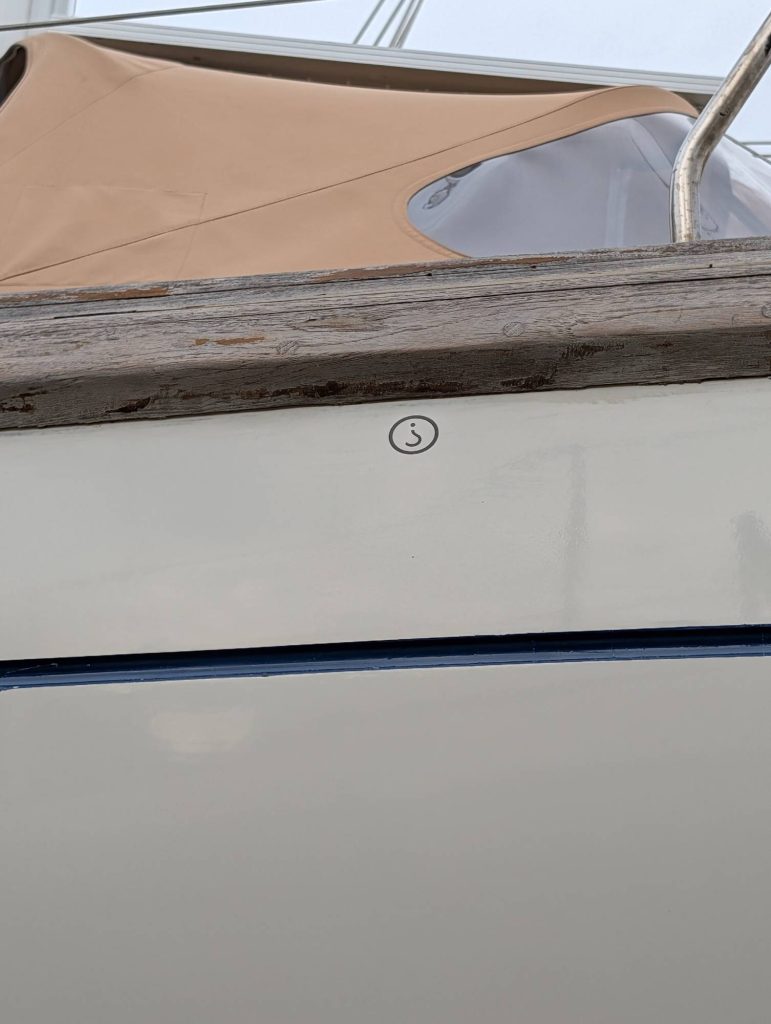
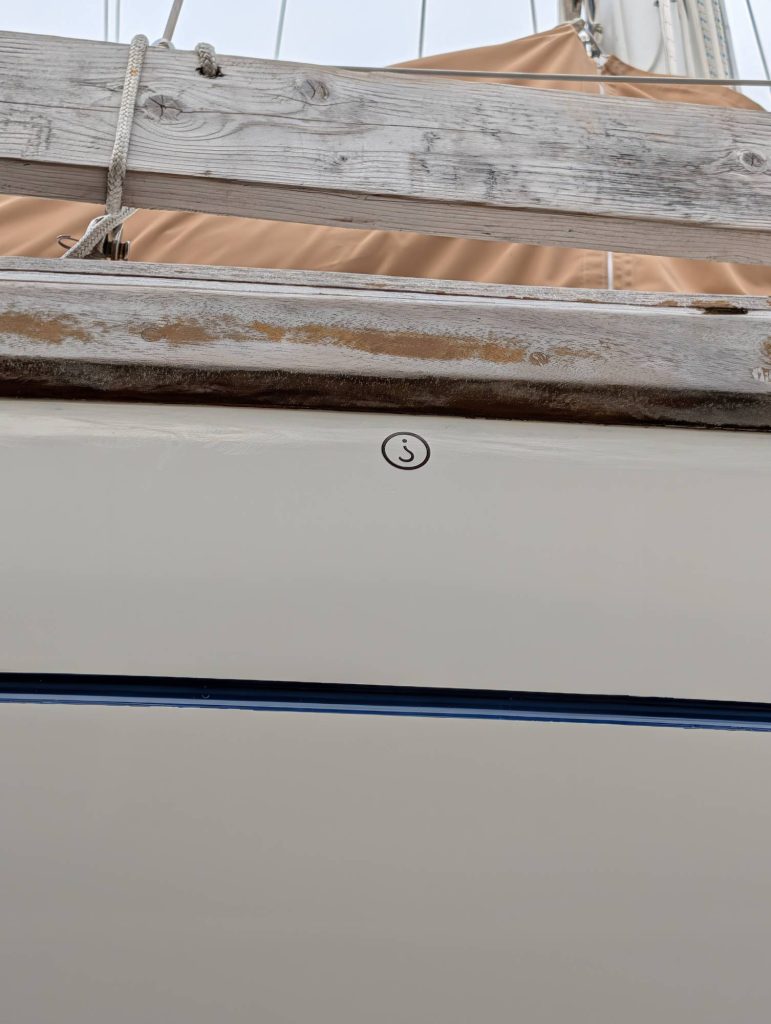
We used PhotoPea to mock up various font faces before finally settling on a font called Lemonmilk. On 16 May, Noelle made her way across Halifax to HFXVinyl. Despite the limited colour selection we had decided that we were going to choose from the Oracal 751C line of vinyl. We had originally had our hearts set on choosing a grey vinyl but the Oracal 751C grey was too light a shade for the white of the hull. We settled on glossy black instead.
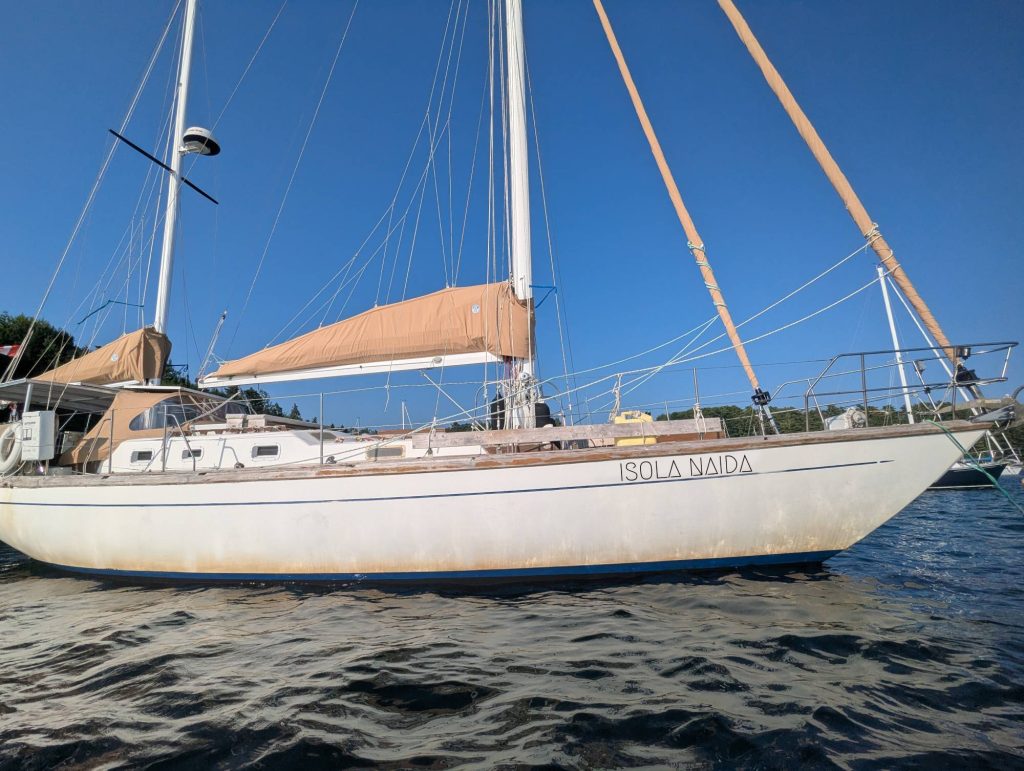
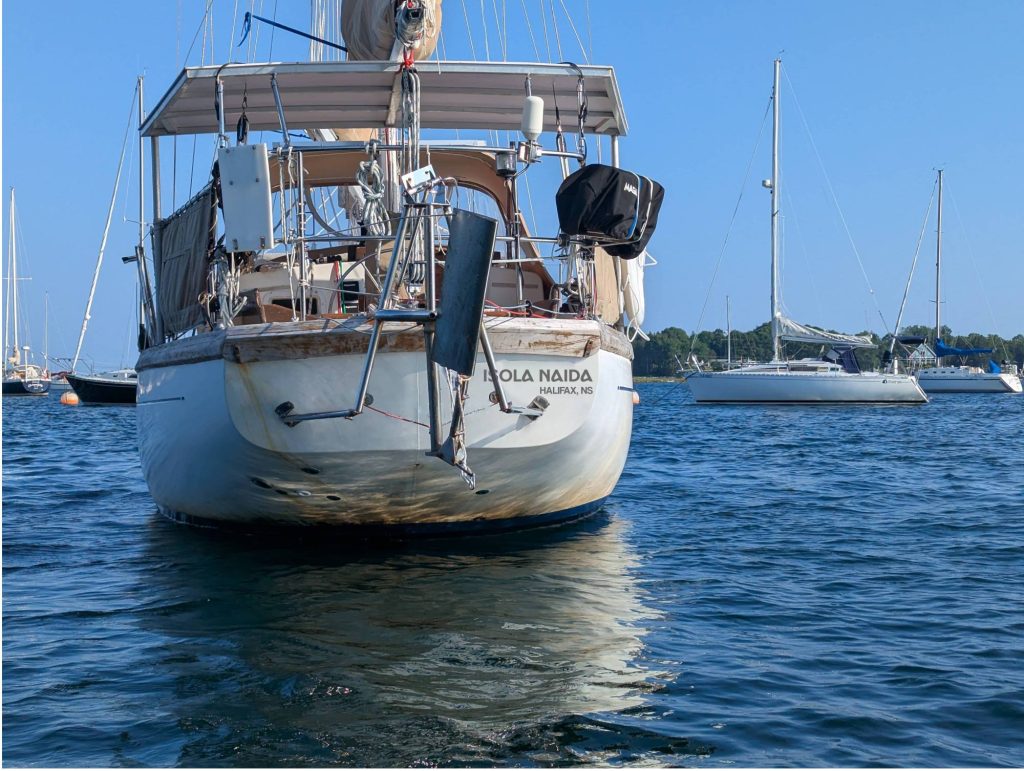
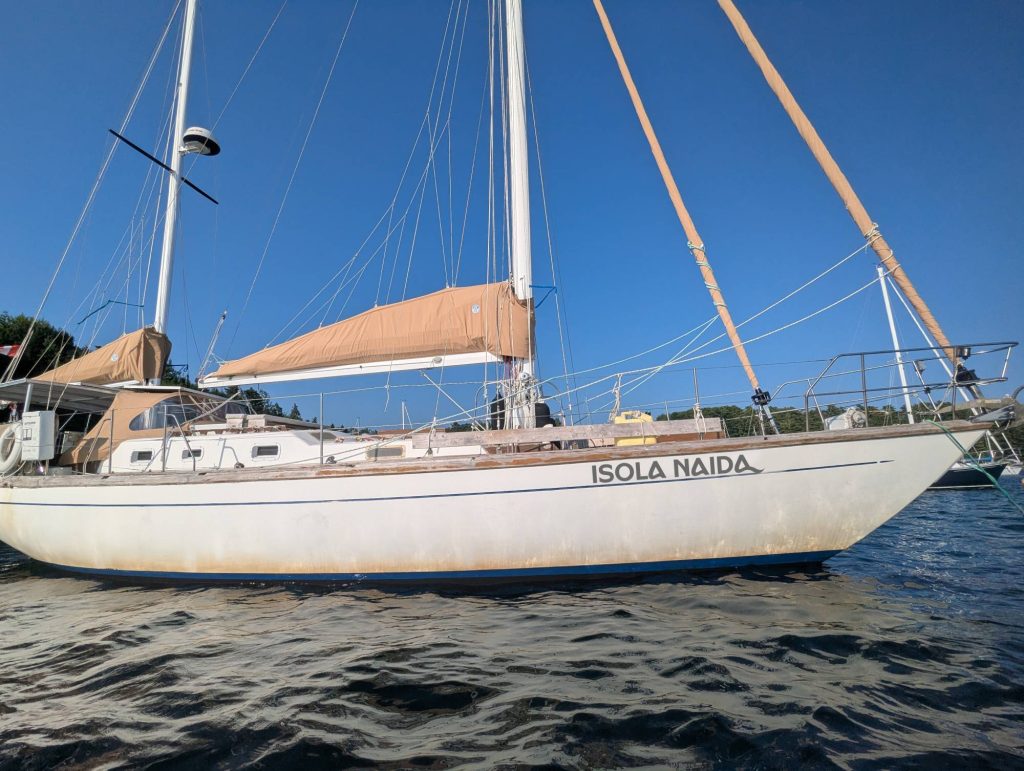
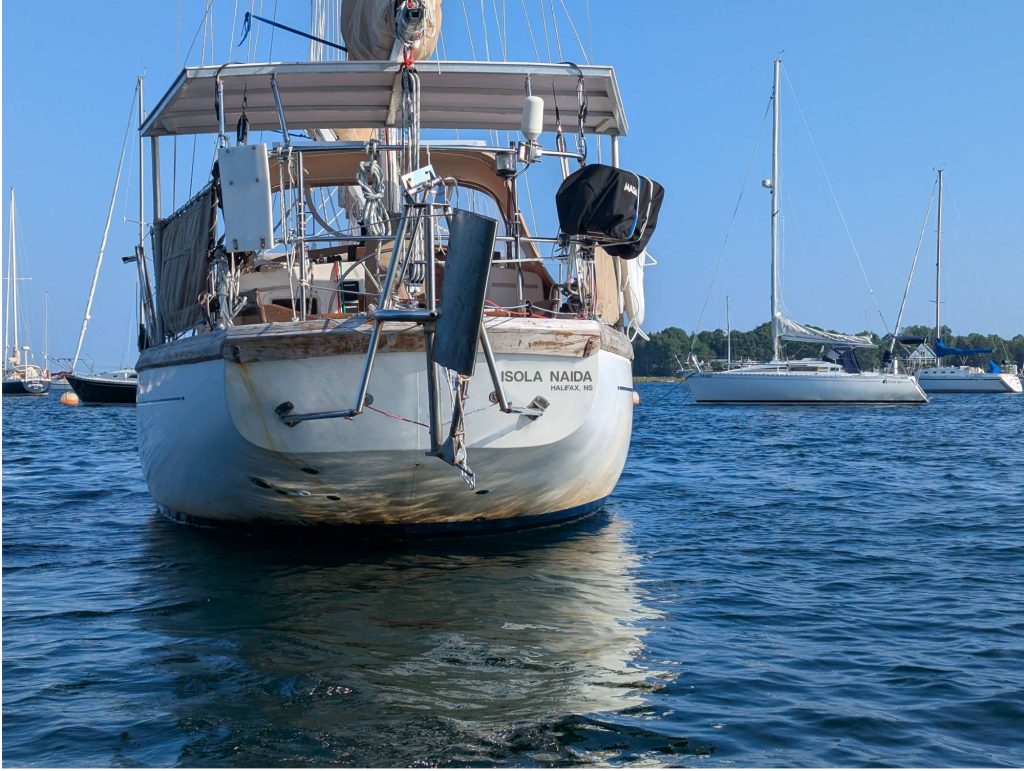
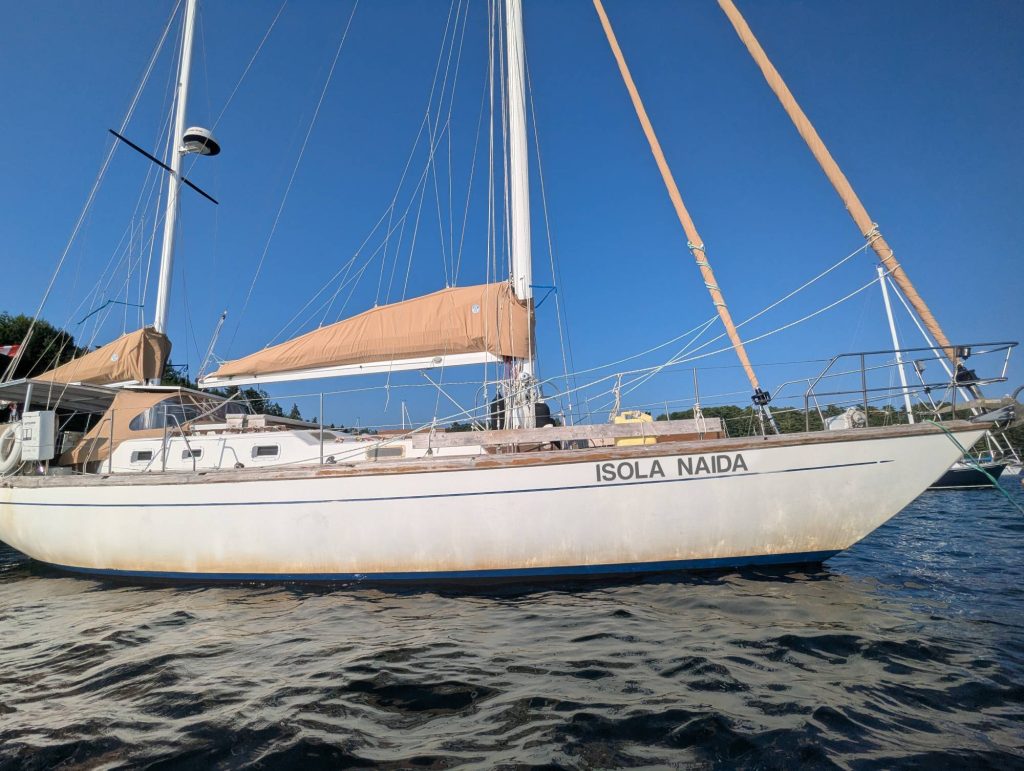
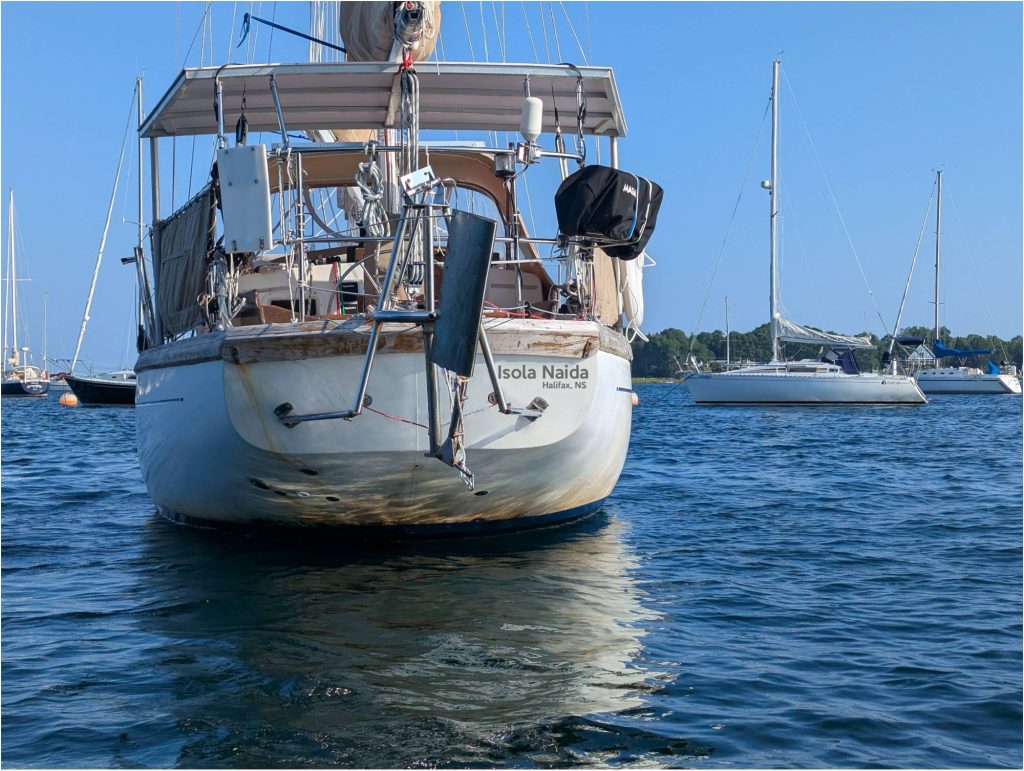
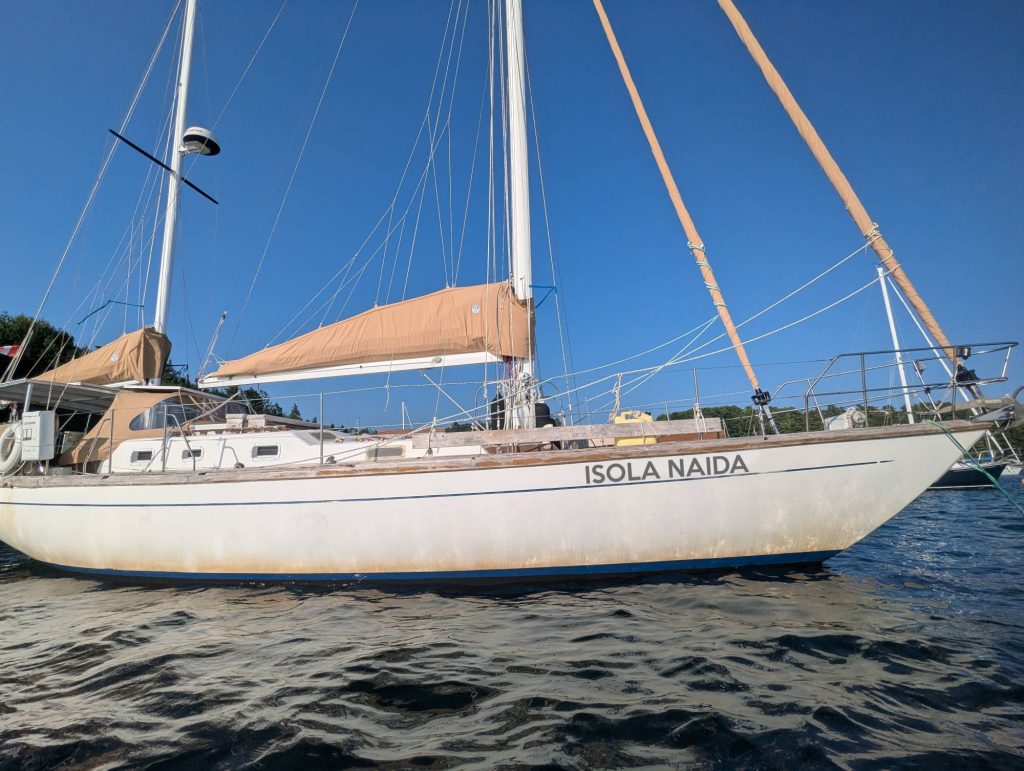
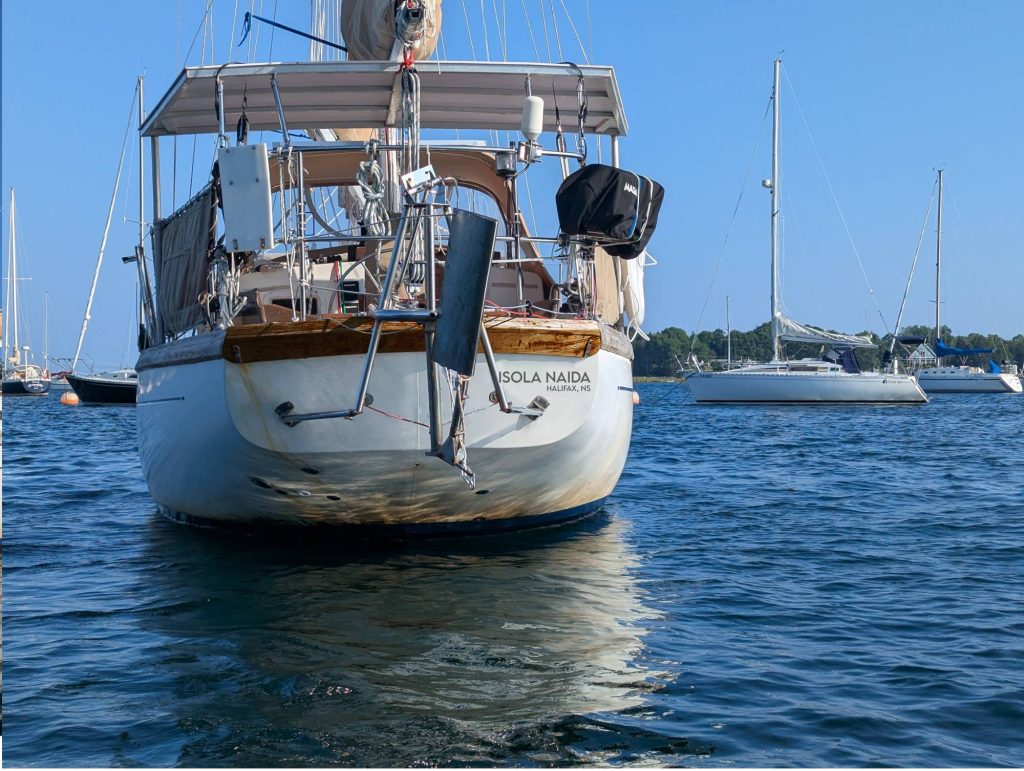
On 17 May, D’Arcy set up the Cricut on the kitchen island of our apartment and laid out the required cuts before weeding the vinyl and adhering them to the transfer tape.
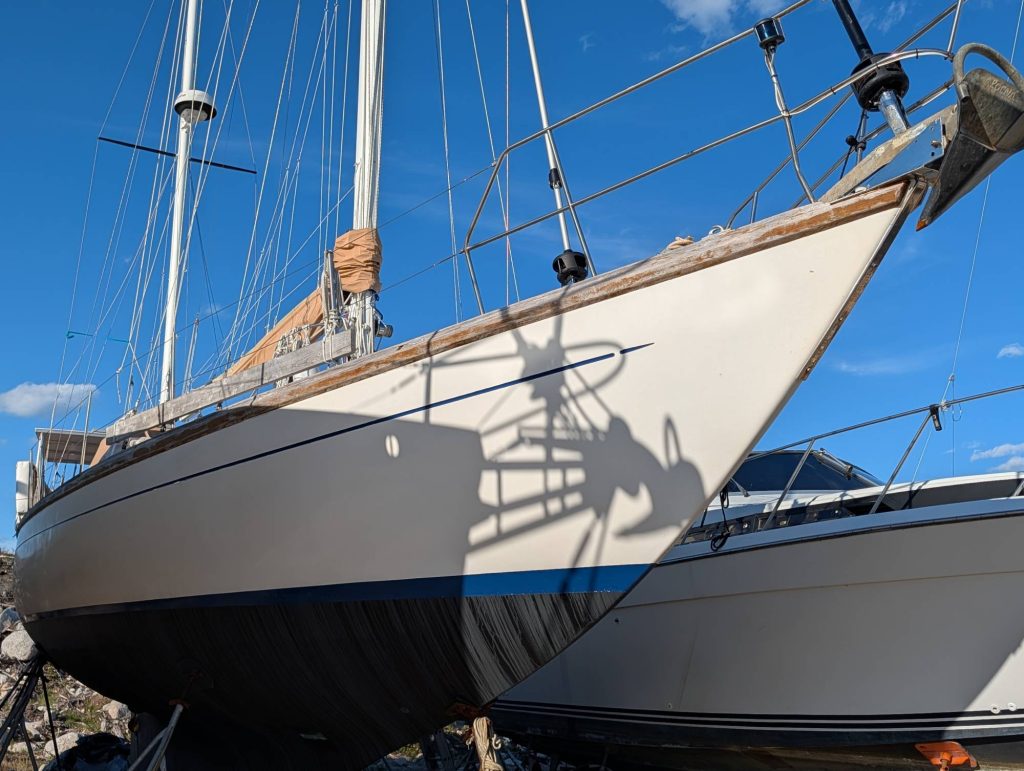
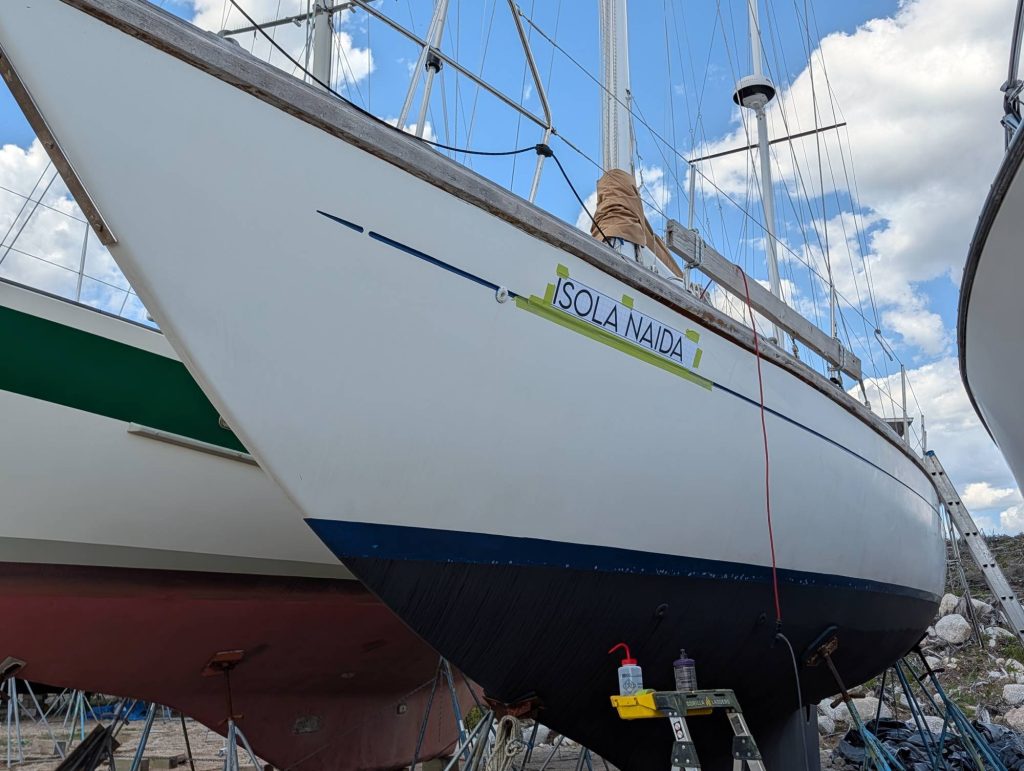
Adhering the new vinyls took a lot of patience marking out lines with masking tape, stepping back dozens of times to make sure that the lines appeared straight, despite the complicated compound curves of the hull. Before the vinyls were permanently affixed to the hull the area was cleaned, polished, polished again, and wiped down with acetone to ensure the best possible adhesion. Afterward, the polished area was waxed to protect the sheen and the vinyls while we continued polishing the rest of the hull.




Near Mirror Finish
Starting 17 May, D’Arcy began the process of polishing Isola Naida’s hull. We’re not sure when the hull was last polished, but it didn’t take much to get the gel coat gleaming again. Before polishing, the hull was washed with Meguiar’s Boat Wash and rinsed with fresh water. Any staining was treated with CRC’s On & Off.
We used 3M Perfect-It EX AC Rubbing Compound and a lambswool polishing pad to polish the hull. Isola Naida has a painted cove stripe and boot stripe, so we had to be careful not to polish over the paint with the lambs wool pad. We were able to skip over the cove stripe easily enough. For the boot stripe we needed to mask off the paint, polish to the tape, then pull off the tape and hand buff the boot stripe. We followed polishing the hull with a coat of Meguiar’s Flagship Premium Marine Wax to protect the finish. We’ll re-apply more wax part-way through the season to continue protecting the hull from the elements.


What’s Next?
With the hull work complete we can turn our focus topside and inside. Before we splash we’ll need to give Isola Naida’s standing rigging a thorough inspection as well as finish rigging the main and mizzen sails. We have some mechanical work to do such as installing the new impeller for our engine’s water pump, inspecting hose clamps, re-packing the stuffing box, and completing our survey of seacocks and through-hulls.
Work won’t stop when we splash either. There’s an extensive list of deck hardware that requires re-seating to eliminate slow leaks and some aesthetic work to complete over the course of the summer.
Follow along with our progress here! You can also find us on Instagram and Facebook.
Leave a Reply
You must be logged in to post a comment.