
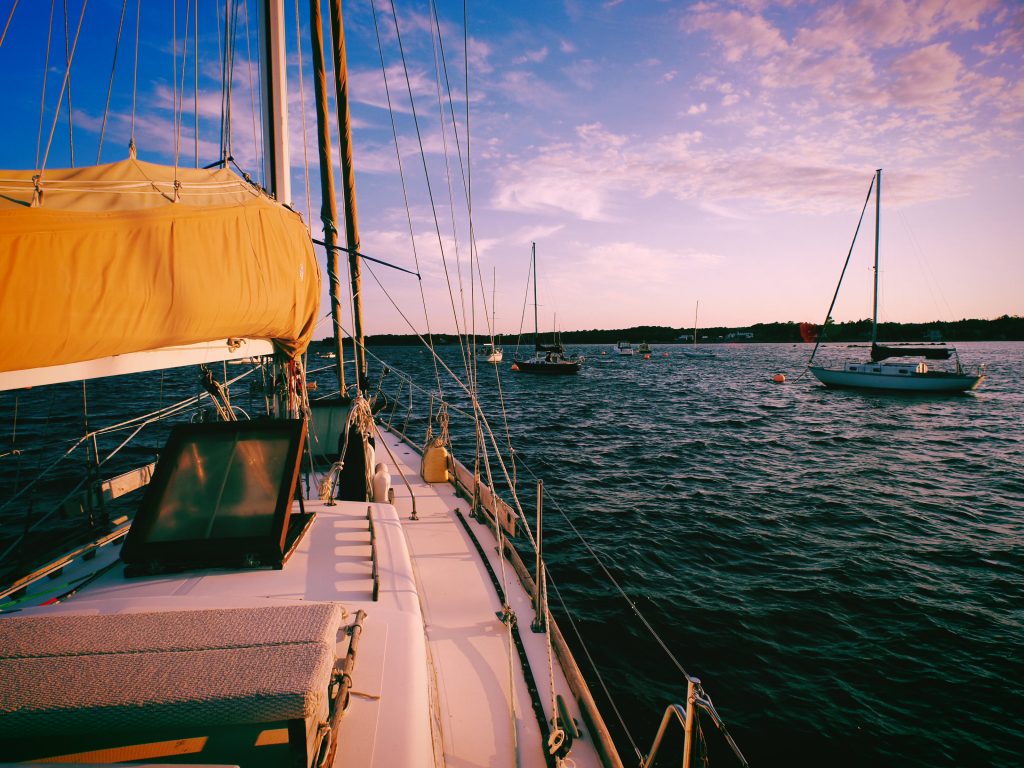

The last two weeks have been busy here ashore, but work continues aboard Isola Naida as we prepare for the arrival of winter. We took advantage of the weather over the last two weekends to get more work done on the exterior of the boat. The calm conditions this past weekend provided the perfect opportunity to remove her sails and pack them away for the season. We also took some measurements and developed a plan to fabricate a reusable winter cover for Isola Naida which, we hope, we will serve us well for years to come.
De-Staining the Hull
On 18 October, D’Arcy took the day to get some work down aboard. As is often the case, the list of planned jobs proved to be more ambitious than time would allow. The weather was cool but dry, making it a good opportunity to tackle the staining around Isola Naida’s hull and give her a good cleaning.
There are many hull-cleaning products on the market, all promising to remove stains without damaging the gelcoat. Having worked in the shipyard for some time, D’Arcy is familiar with CRC Marine’s On & Off, a muriatic acid–based cleaner that’s excellent for removing heavy staining and barnacles. Since Isola Naida’s hull wasn’t in terrible condition, and for reasons of cost and availability, we decided to try Marine Spray Nine Marine’s Boat Bottom, a phosphoric acid–based cleaner that’s gentler but still effective on general staining.
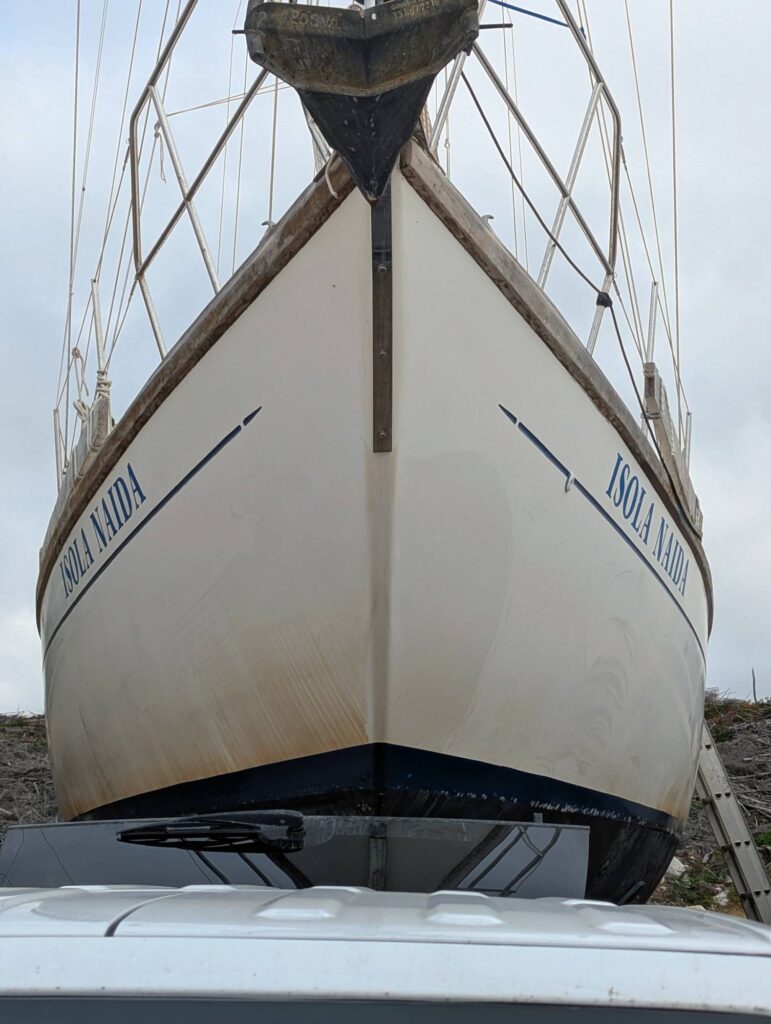
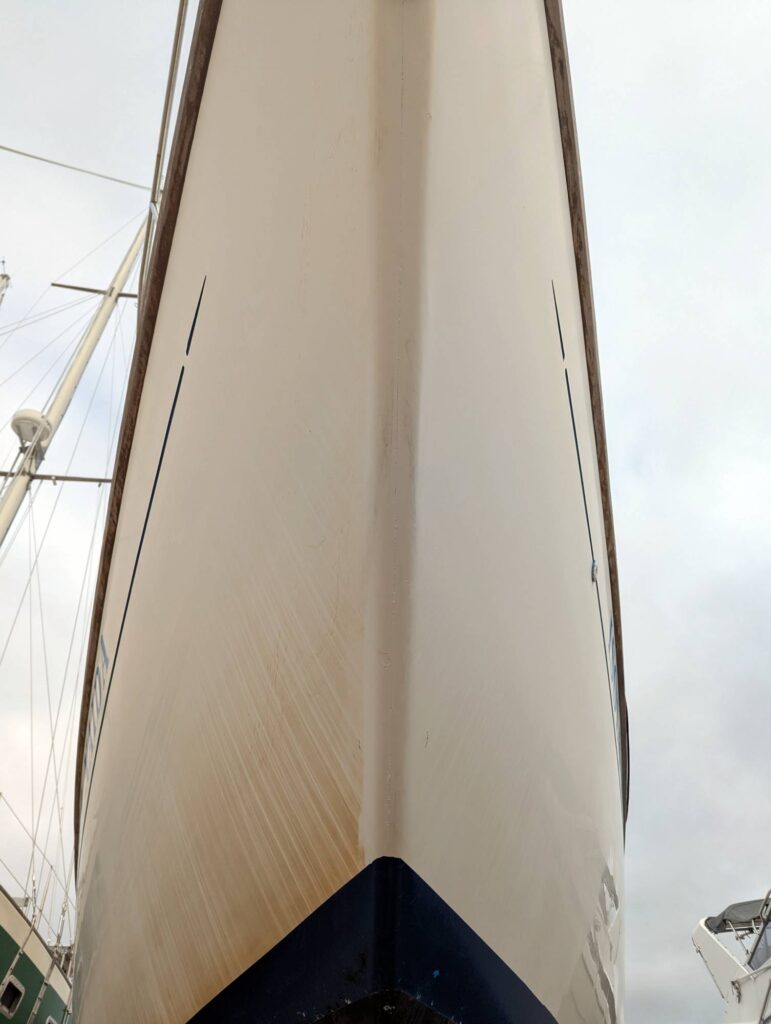


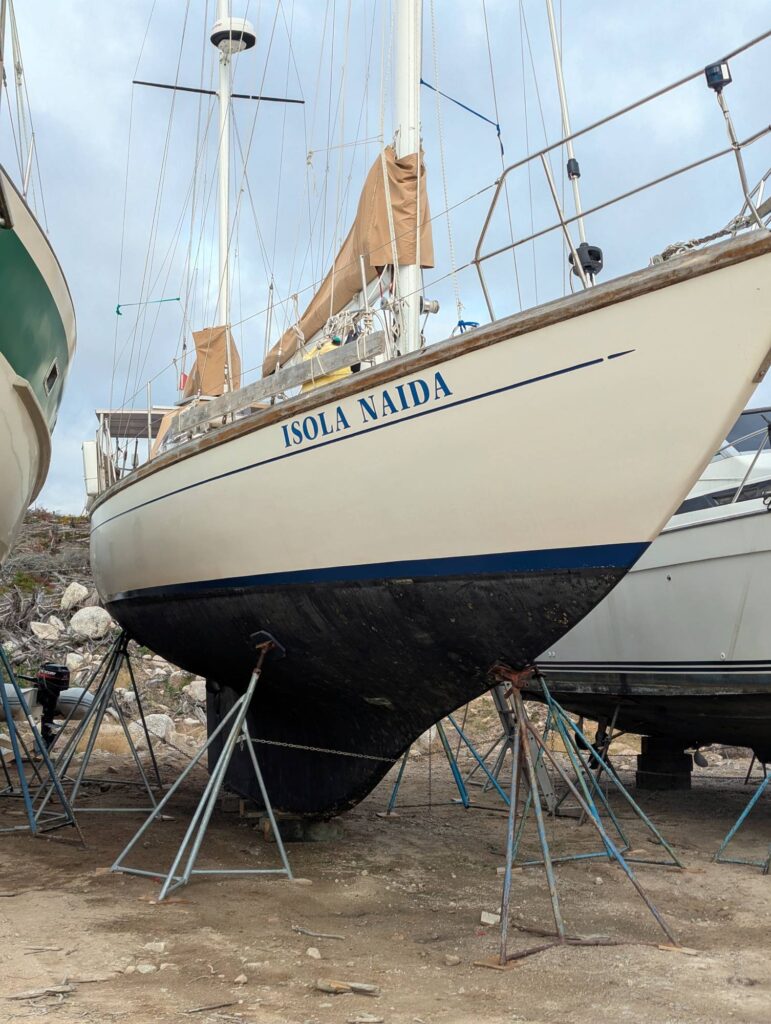


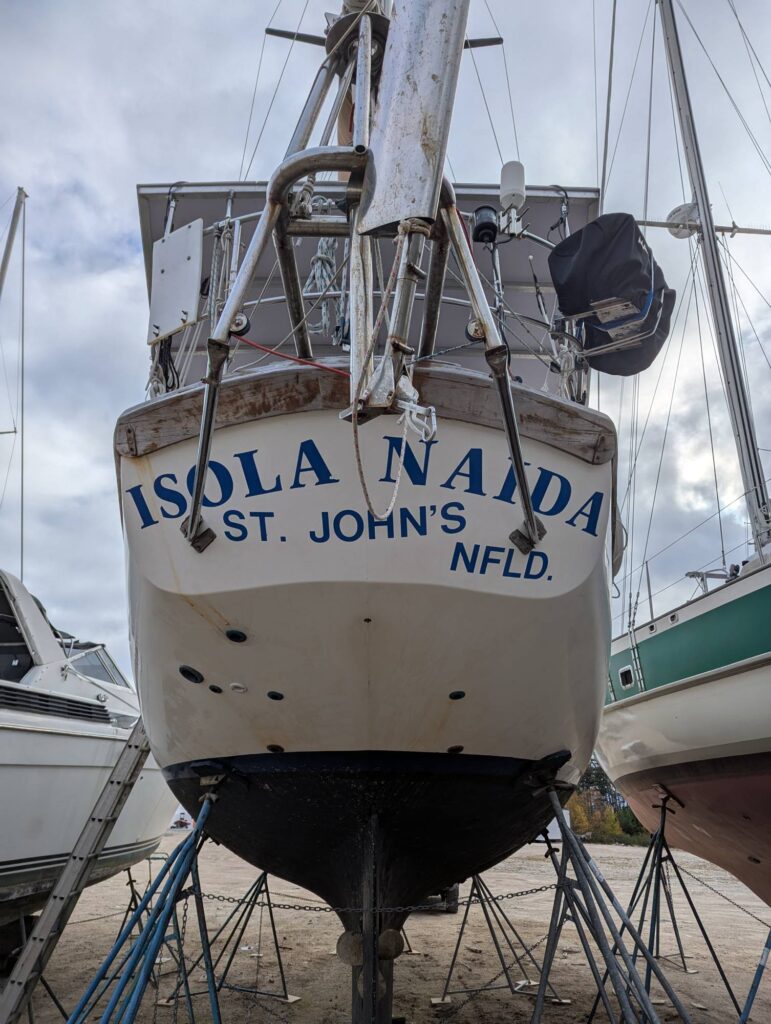
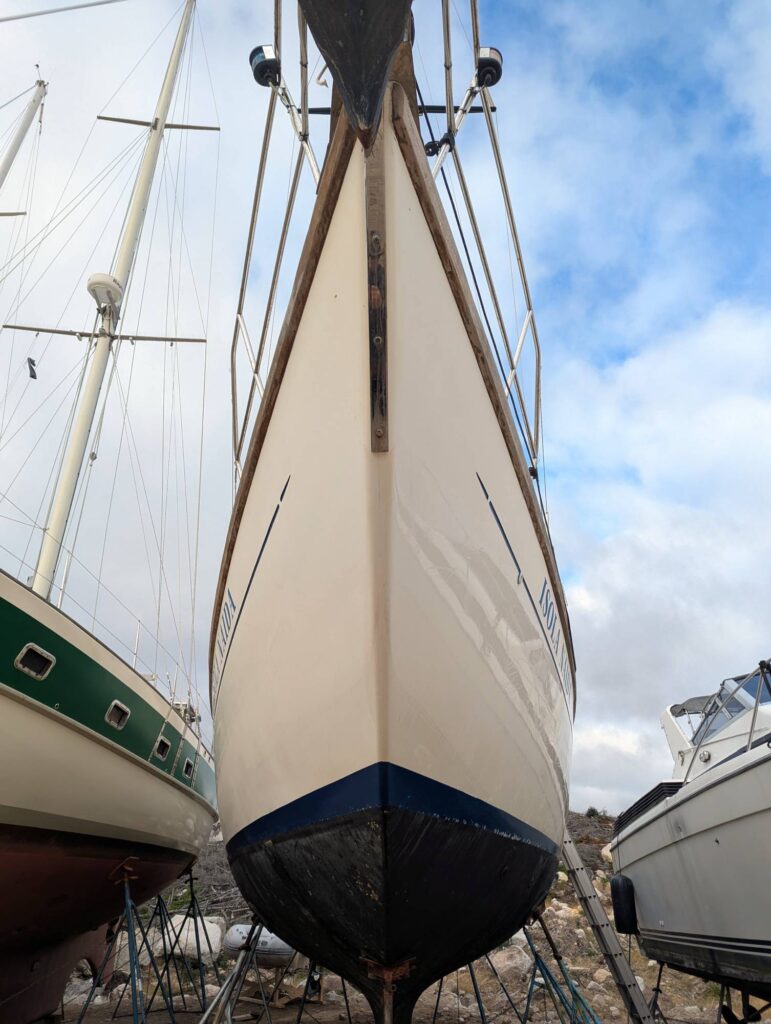
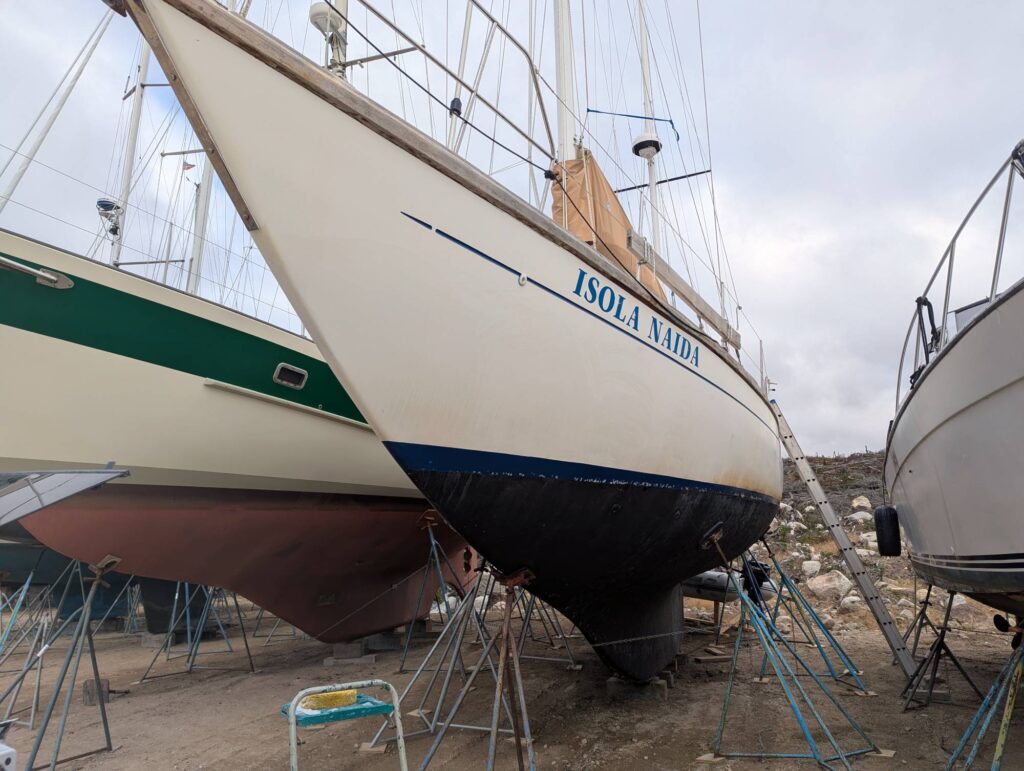
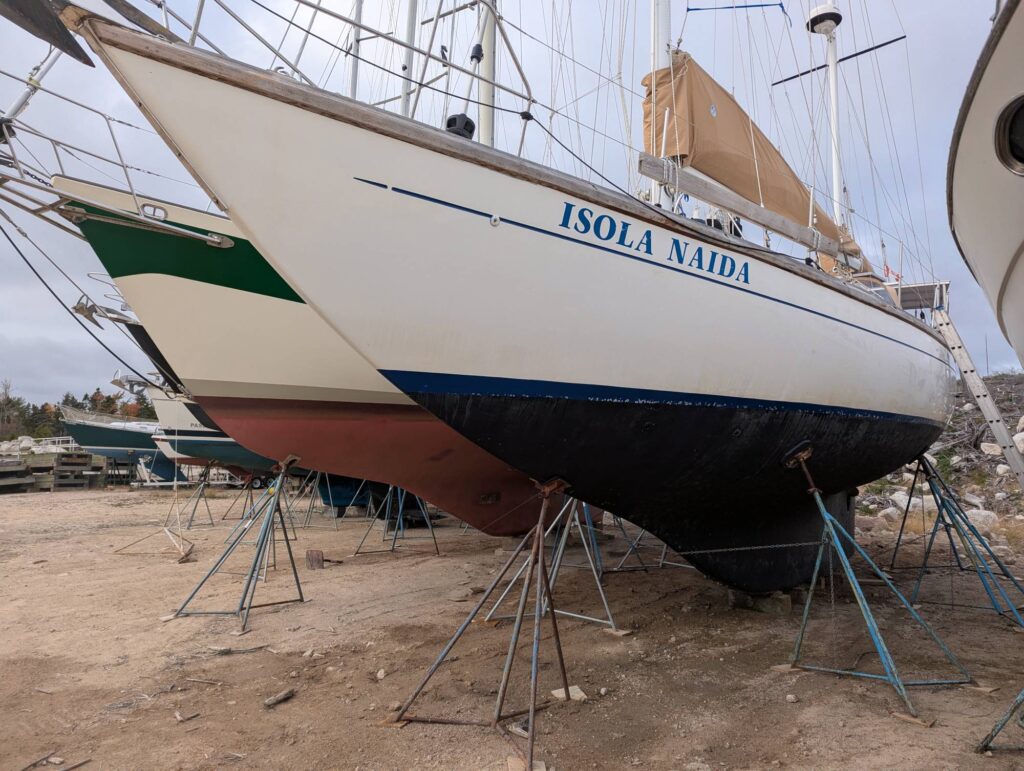
Overall, Boat Bottom did a respectable job of lightening the stains on Isola Naida’s hull, and the results look quite good in photos. In person, some shadowing remains, and a few barnacles along the boot stripe will still need attention. Perhaps reason enough to invest in a bottle of On & Off next time.
Removing the Sails
On 26 October, we made our way to Isola Naida to cross a few more items off the to-do list. The main task for the day was to take advantage of the calm forecast to remove and fold the main and mizzen sails for storage. Both came down smoothly. We laid the main sail across the boom to dry out in the sun after the previous week’s rain.

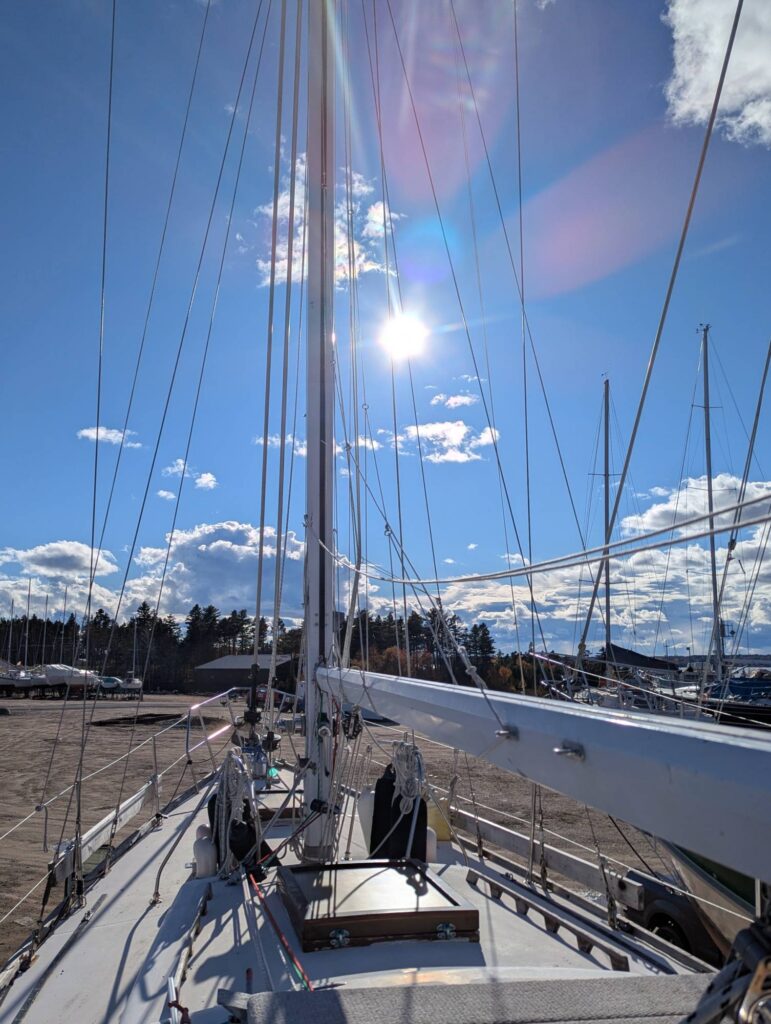

Before long, a large dark cloud rolled in from the north, and the wind began to pick up. Not wanting to risk losing or damaging the sail, we quickly rolled and tied it, then passed it over the side to stow in the Jeep, safe from the weather. Later in the day, we brought the sail to one of the storage buildings in the yard to lay out and refold properly before leaving for the day.
Preparing for Winter
With colder weather on the way, we’ve been developing a plan to cover Isola Naida and protect her from snow and ice. Around the yard, we’ve seen a wide variety of winter cover solutions. Many owners opt to shrink-wrap their boats – effective, but costly, with prices hovering around $1,000 for a vessel of Isola Naida’s size. That’s had us exploring alternatives.
A custom-fabric cover would be ideal, but the cost would still be high. It’s something we might pattern and sew ourselves in the future. Some owners insist that only the cockpit needs to be covered to protect electronics, since the decks should already be weather-tight. While that makes sense, we’d still prefer to shield as much of the deck as possible, particularly the wooden hatches, which could suffer from freeze–thaw cycles over the winter months.
After some research, we’ve narrowed our framing options down to three main solutions:
Solution 1 – Aluminum Conduit
Pros
- Can be bent to any desired arch or headroom
- Strong, durable, and long-lasting
- Connects easily along a centre-line spine
Solution 2 – PVC Pipe
Pros
- Can be flexed or heated to form arched shapes
- Connects with standard tee and cross fittings
- Lightweight and affordable
Solution 3 – Timber A-Frame
Pros
- Low-cost and simple to construct
- Fully customizable with basic tools
Cons
- More expensive than other materials
- Requires specialized bending tools or pre-bent sections
- Heavier than PVC, though lighter than wood
Cons
- Can become brittle in extreme cold
- May crack under heavy snow loads
Cons
- Heaviest option, especially when vaulted
- Susceptible to moisture and rot
- Difficult to transport and store long lengths
At the moment, we’re leaning toward the PVC pipe framing solution. It offers the best balance of flexibility, cost, and strength — allowing us to create arched ribs connected to a centre spine that maximizes headroom under the tarp while supporting winter snow loads.
For the tarp itself, we’ve sourced a 30′ x 60′ (9.14 m x 18.28 m) sheet, large enough to cover the full length of the boat and its framing. We’ll need to cut openings along the centreline to accommodate the masts and furlers. These cuts will be reinforced with tuck tape and lined with grommets so the edges can be re-stitched once the tarp is in place. Finally, the tarp’s lower edges will be lashed beneath the hull to keep it secure against the wind.
Until Next Week!
As we move closer to winter, we’re eager to get Isola Naida tucked safely beneath her cover and ready for the months ahead. If you’ve built your own winter frame or have tips for keeping a boat protected through harsh weather, we’d love to hear from you! Your experience could help shape our next steps. You can share your thoughts in the comments below or connect with us on Instagram and Facebook, where we post regular updates and photos from life aboard and ashore.
Leave a Reply
You must be logged in to post a comment.