Category: Sailing

  • Launching Isola Naida and Sailing to Dartmouth Yacht Club

    Launching Isola Naida and Sailing to Dartmouth Yacht Club

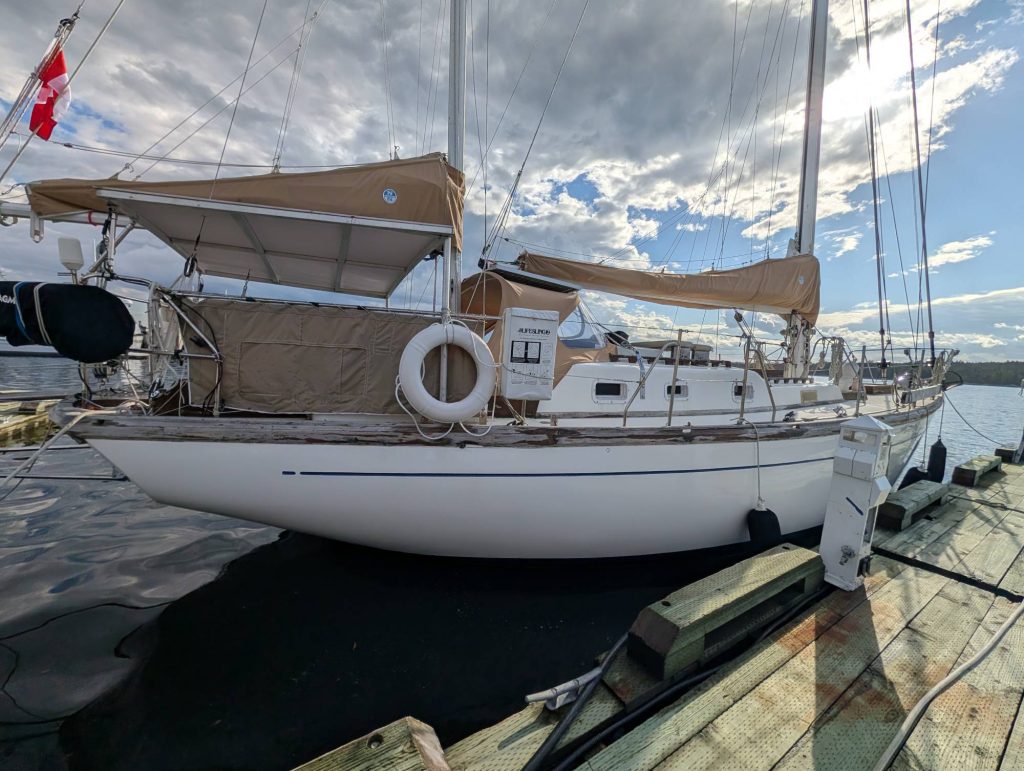
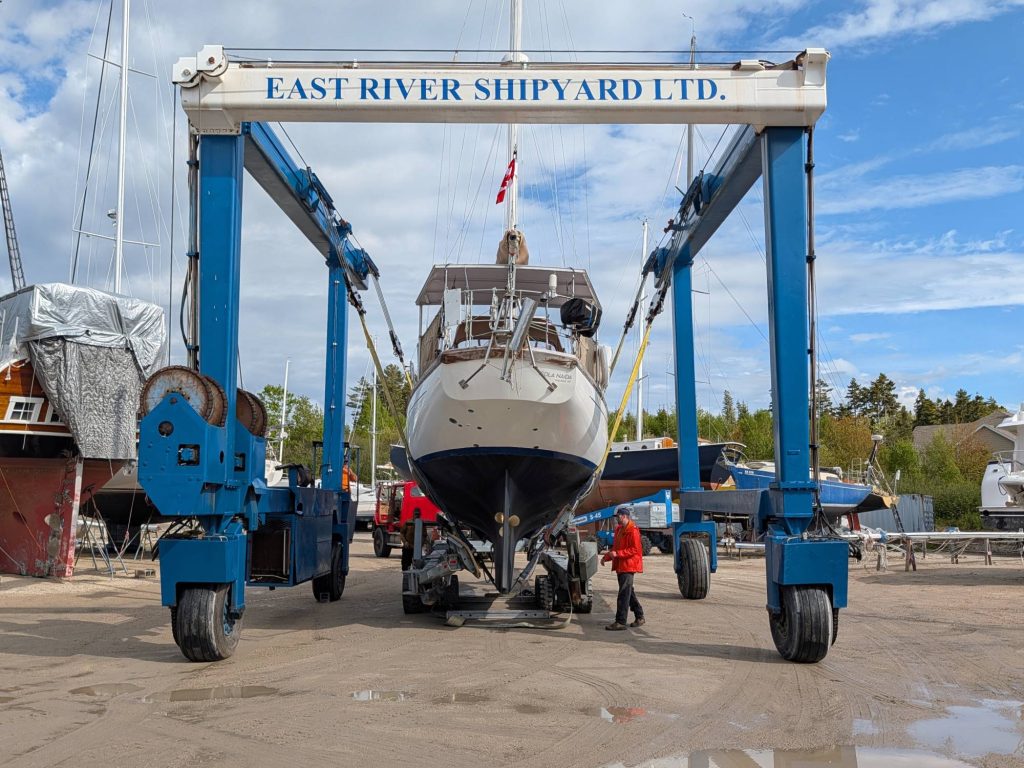
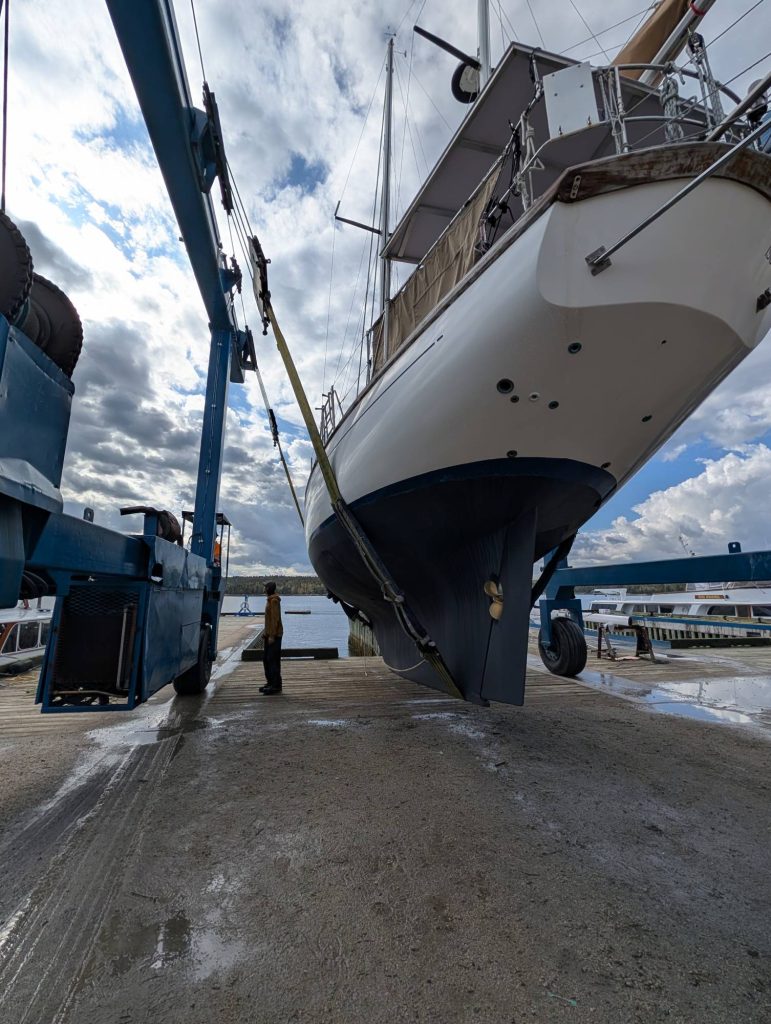
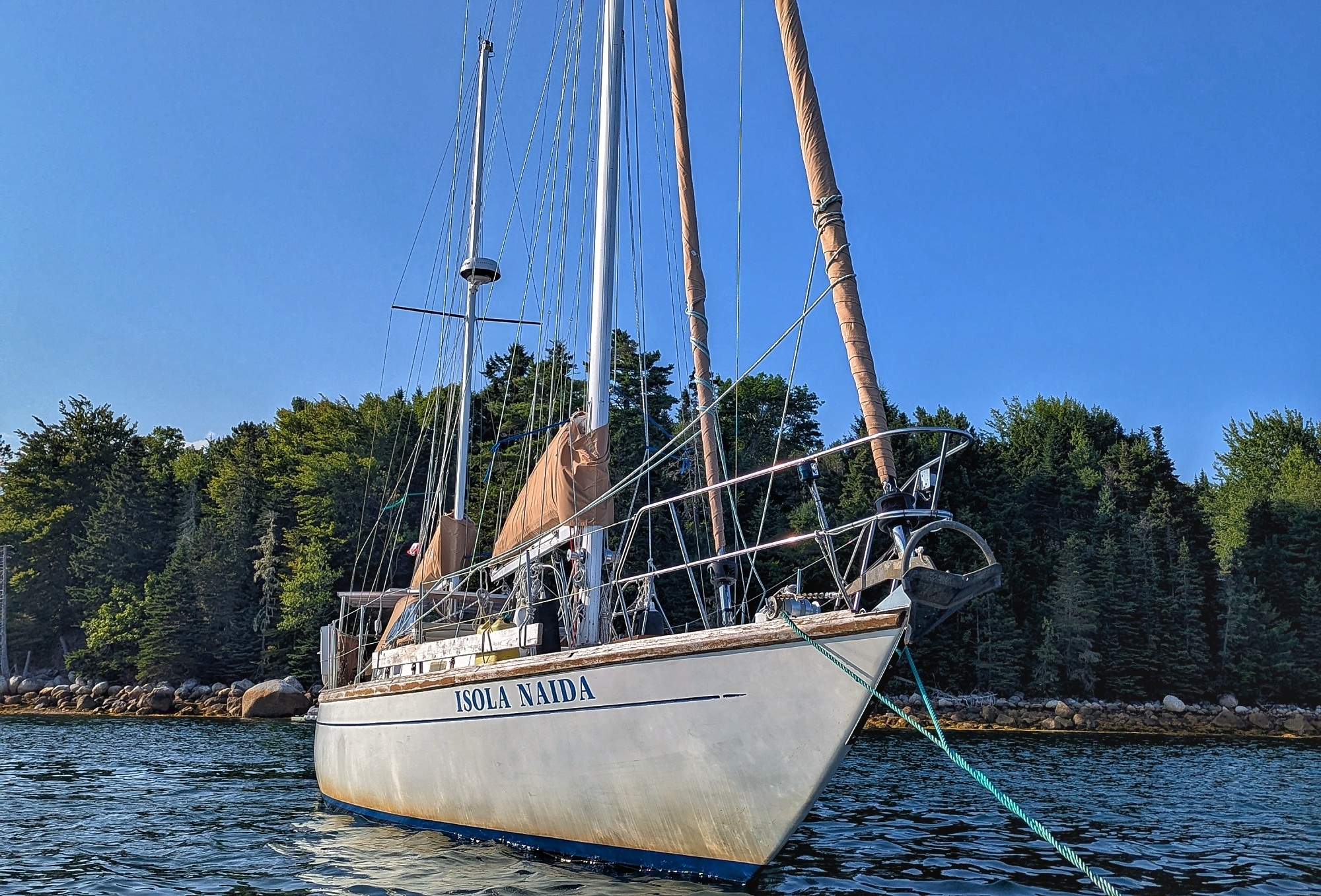
    After weeks of preparation, the day finally arrived. On 2 June, we launched Isola Naida at East River Shipyard on Nova Scotia’s South Shore.

    Just before launch, we had repacked the stuffing box, and there had been some confusion over the appropriate packing size. We spent some time in the travel lift slings monitoring the stuffing box to ensure the new packing was working correctly and that water ingress into the bilge remained within acceptable limits. With everything looking satisfactory, we started the engine and motored over to a berth on the docks, where we spent the next few days preparing for the voyage to Dartmouth Yacht Club.
    Our route would take us from East River Shipyard along Nova Scotia’s South Shore, past Peggy’s Cove, Lower Prospect, Sambro Harbour, and Halifax Harbour before arriving at Dartmouth Yacht Club.

    Sailing Upwind Along Nova Scotia’s South Shore

    We departed East River Shipyard on 6 June shortly after 0600.

    In the days leading up to the voyage, D’Arcy spent a great deal of time aboard preparing the boat: completing outstanding projects, filling the freshwater tanks to provide ballast, preparing a jerry can of fresh diesel fuel, hoisting the dinghy outboard aboard, and securing the dinghy on the cabin top. With all sails rigged and ready, we were finally prepared to get underway.

    Winds were light as we left the dock with five souls aboard. Noelle had reached out to several friends from work with sailing experience, and we were grateful to have the extra hands on deck.
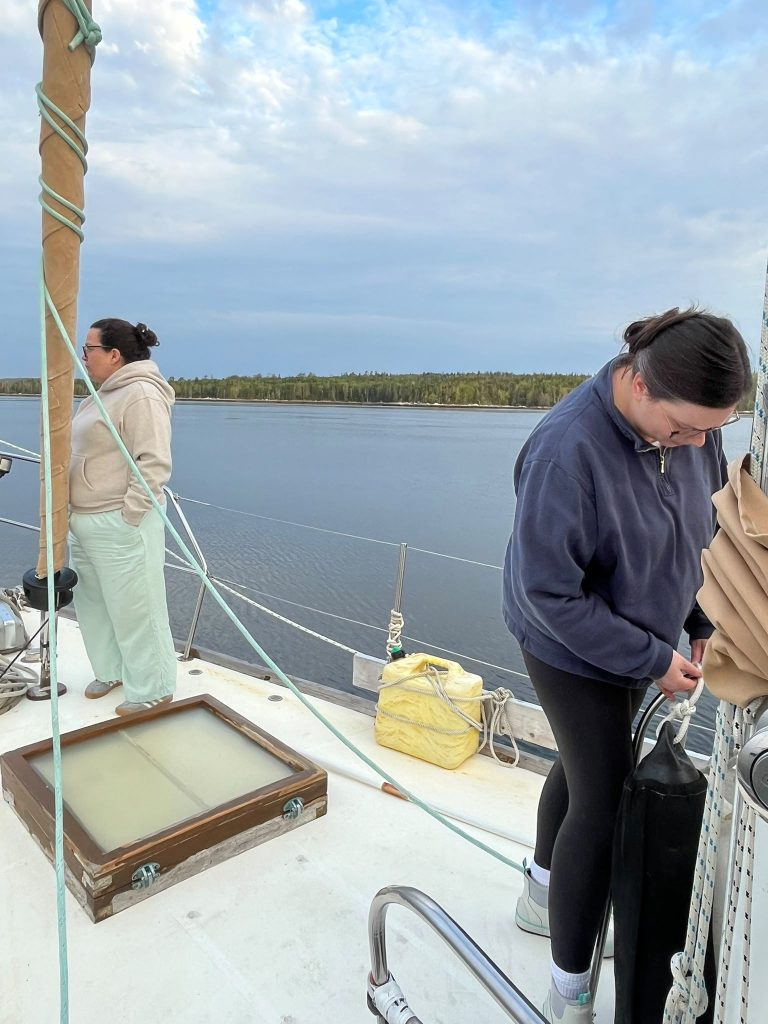
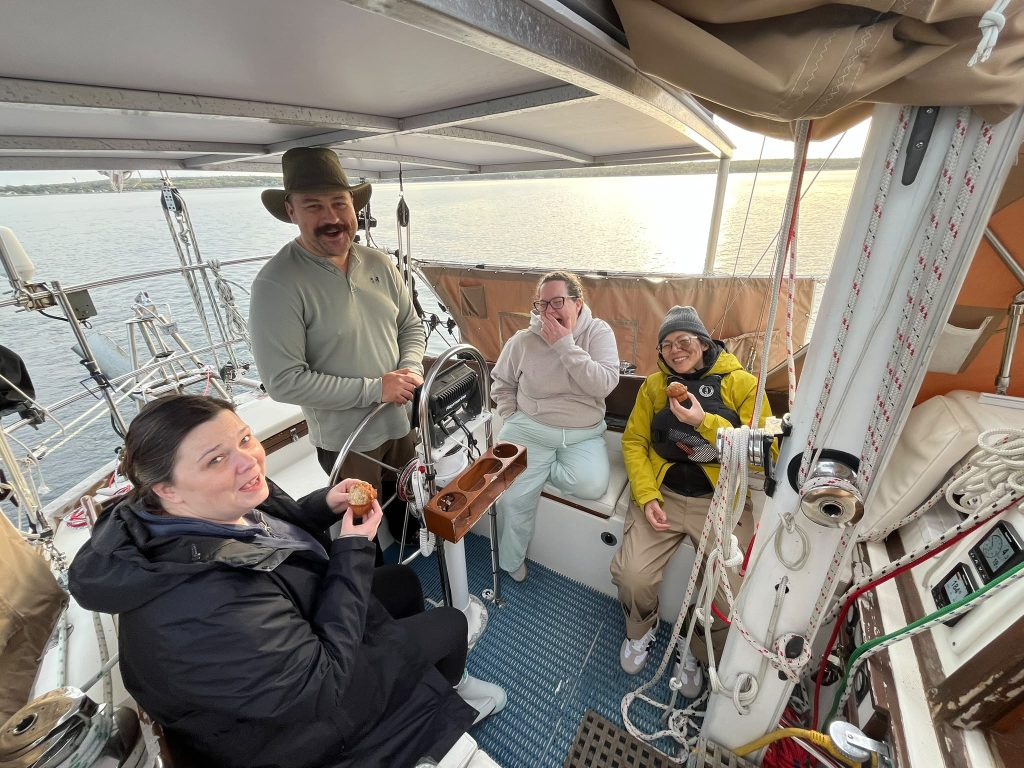
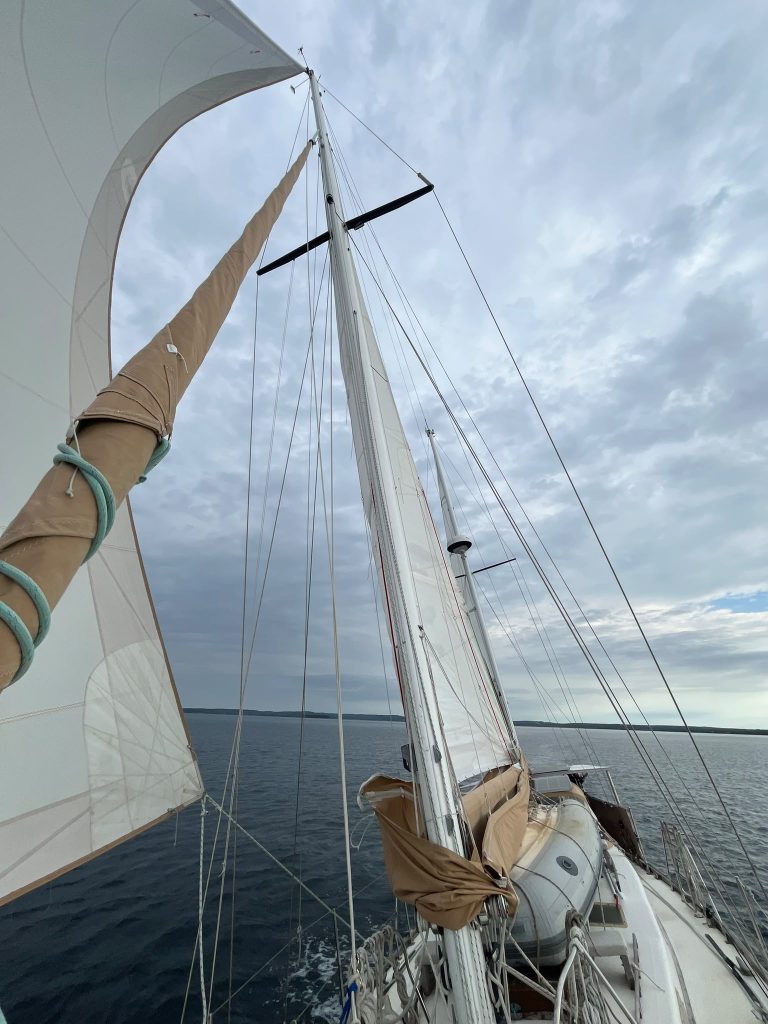
    As we approached Blandford and Little Tancook Island, we hoisted sail and shut down the engine. For the first time this year, Isola Naida was sailing.

    Having watched the forecasts closely for several days, we expected to spend most of the passage sailing upwind. The winds were forecast to be easterly in the morning before shifting southeast later in the day. It was a wind shift that never arrived.

    As a full-keel ketch measuring only 11.5 feet at the beam, Isola Naida points remarkably well for a large, heavy-displacement cruising boat. In calm sea states, she can sail as close as 30 degrees off the apparent wind before beginning to luff. She performs best between 45 and 60 degrees off the wind under white sails. In larger seas, however, especially when sailing close-hauled into the waves, her speed over ground can suffer considerably.
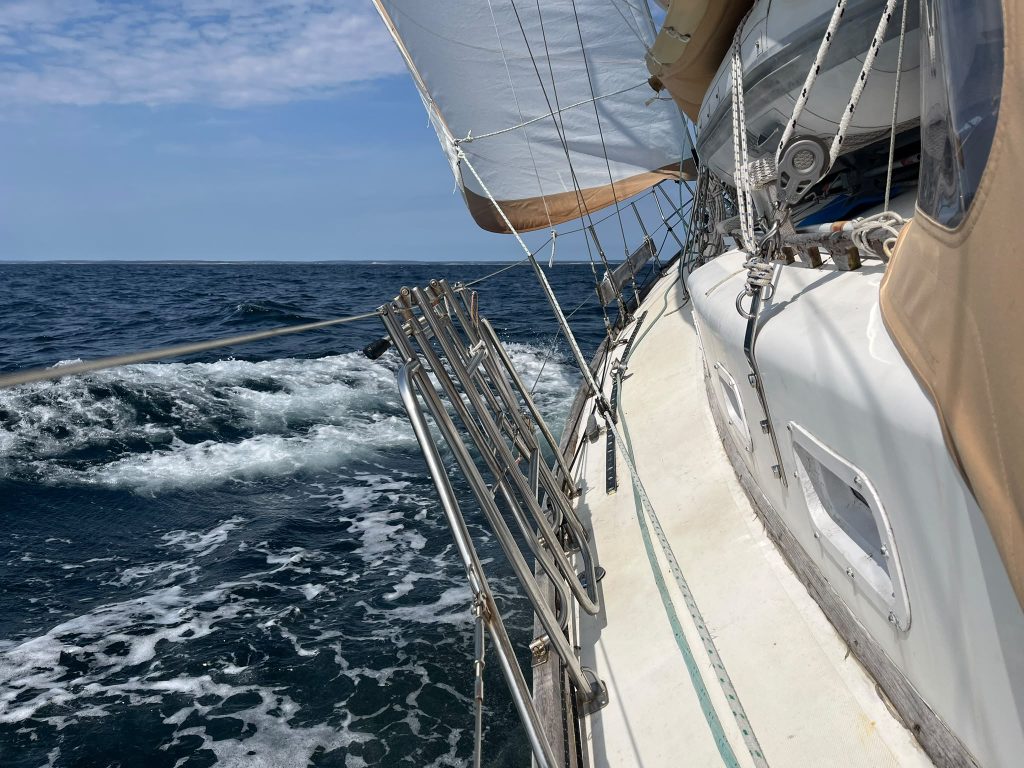
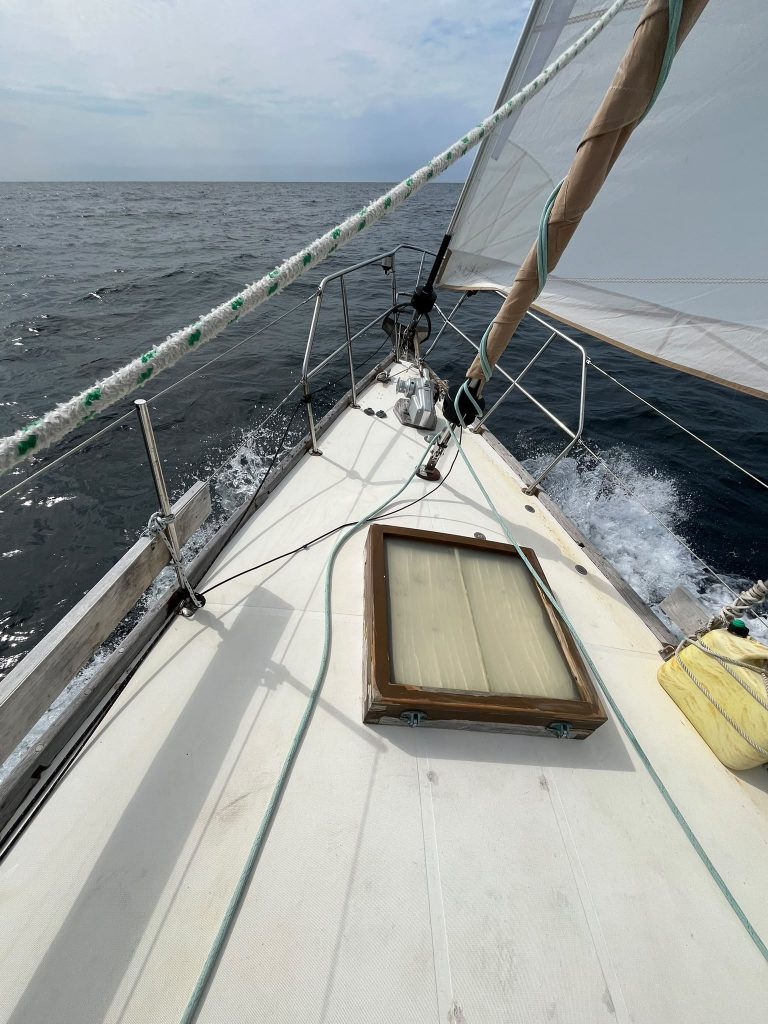
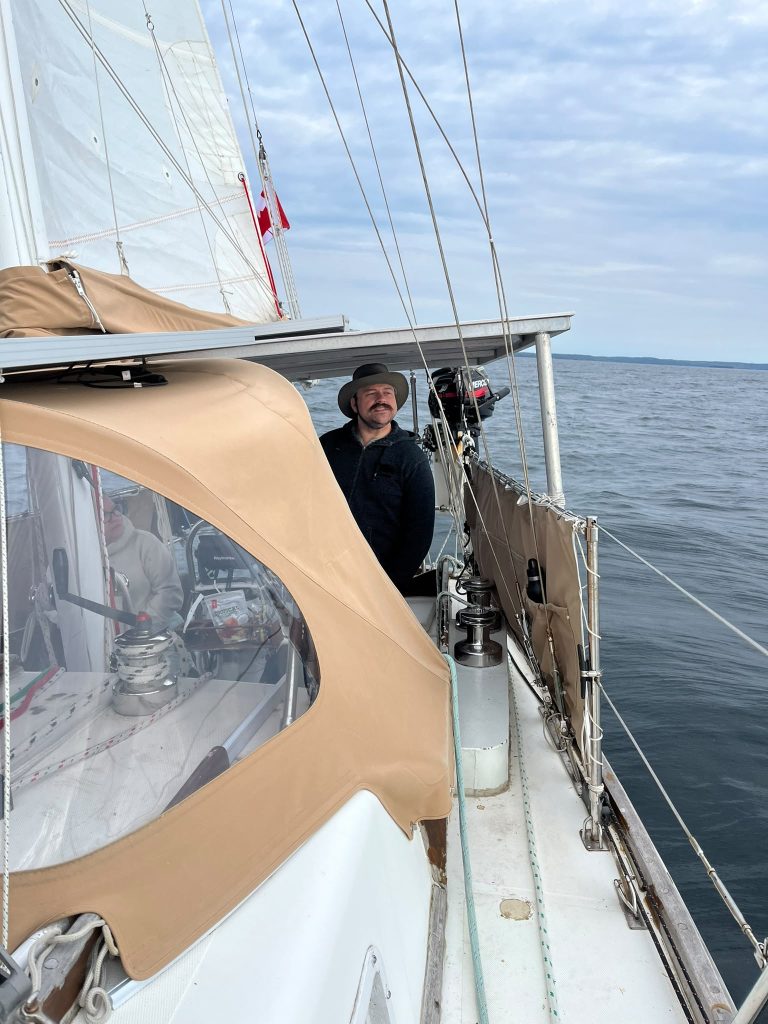
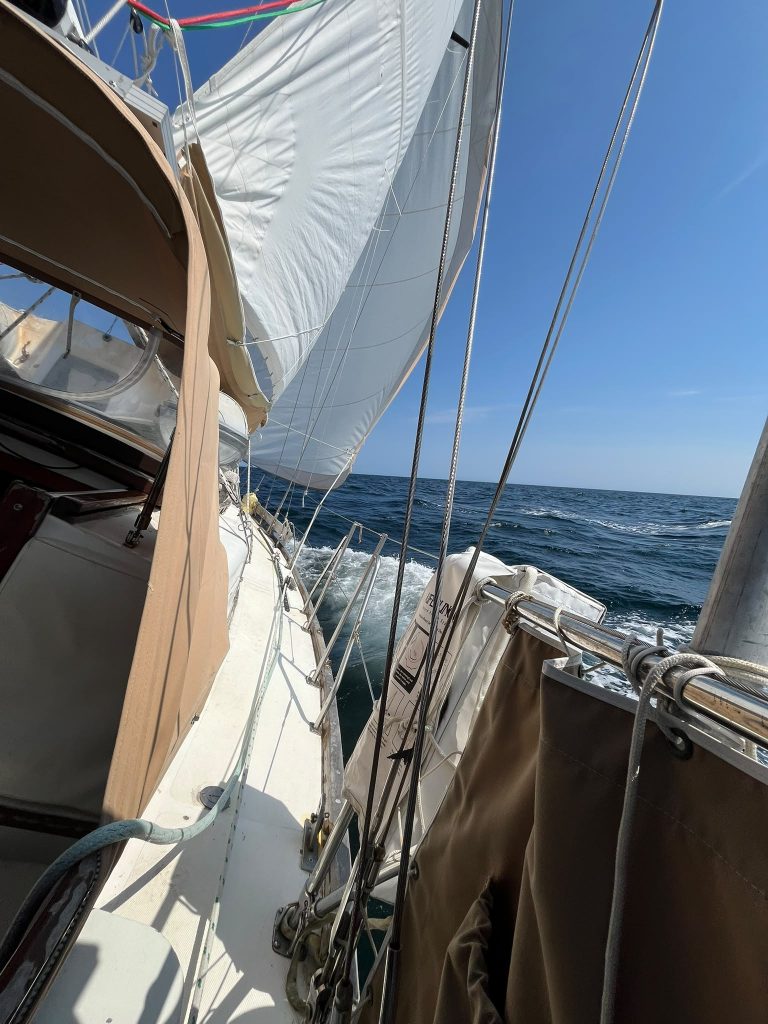
    Throughout the day we experienced winds of 15 to 19 knots and seas of 1 to 1.5 metres. The boat handled beautifully under sail, driving steadily through the waves with a comfortable heel. At times we approached seven knots over ground.

    Despite the boat’s performance, progress eastward remained frustratingly slow. By noon we had still not crossed the entrance to St. Margaret’s Bay. We finally passed Peggy’s Cove Lighthouse around 1330 and, by 1630, were still only offshore of Lower Prospect.

    Realizing that we would not reach Halifax Harbour—let alone Dartmouth Yacht Club—before dark, we decided to seek shelter for the night and get our guests ashore. The nearest practical destination was the Lower Prospect Government Dock.

    We started the engine, turned northeast, and began motoring toward the harbour.

    Approximately five minutes later, the engine began to bog down before sputtering out completely. Attempts to restart it resulted in the engine running briefly before dying again.

    With the vessel disabled, a relatively inexperienced crew aboard, and the entrance to Lower Prospect ahead of us, D’Arcy made the decision to transmit a PAN-PAN call on VHF Channel 16 requesting assistance to the nearest safe harbour.

    The call was answered by the Joint Rescue Coordination Centre (JRCC) in Halifax. After collecting our position and vessel information, JRCC coordinated with Halifax Harbour Traffic Services and issued a request for assistance to nearby vessels.

    When no nearby vessels responded, the Canadian Coast Guard dispatched CCGS Mira Bay from Sambro Harbour to assist.
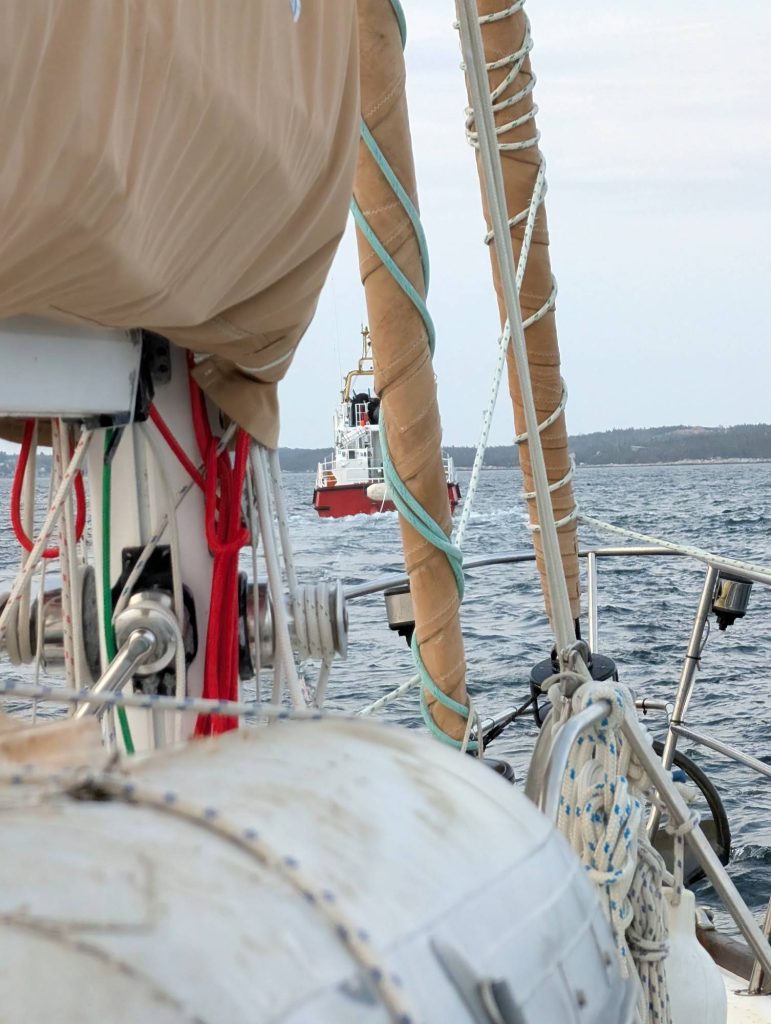
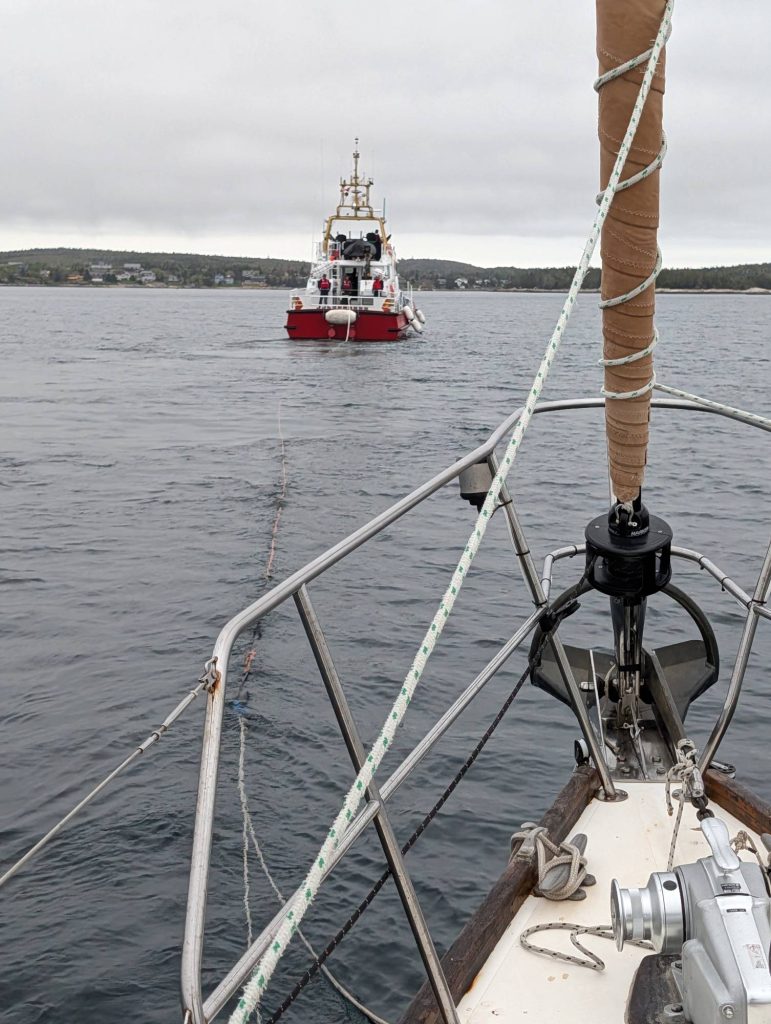
    Within an hour, Mira Bay was on scene and passed a towing bridle to the foredeck. Once secured, they began towing us toward Sambro Harbour.

    After passing Isle of Man and Bald Rock, the crew of Mira Bay brought us alongside and passed over a stern line and two spring lines. With the assistance of two local fishermen waiting on the wharf, we were secured alongside the Sambro Public Wharf shortly after 2100 and finally able to get our crew ashore for the night.

    Diagnosing a Diesel Bug Fuel Problem

    The following morning, D’Arcy caught a ride with Courtney, one of the mechanics from East River Shipyard, back to retrieve the Jeep we had left behind before departure. Courtney then accompanied him back to Sambro Harbour to investigate the engine problem.

    On the way out of the yard, they recruited Matt, another mechanic from East River Shipyard, to help with the diagnosis.

    It did not take long to identify the culprit: diesel bug contamination in the fuel system.

    Diesel bug is a microbial contamination that grows at the interface between water and diesel fuel. When disturbed, it can clog fuel filters and restrict fuel flow to the engine.

    Fortunately, the fuel filters had done their job and prevented the contamination from reaching the engine itself. Unfortunately, in doing so, they had become clogged and were no longer allowing sufficient fuel flow.

    The previous day’s heavy sailing had stirred up sediment and microbial growth that had likely been sitting undisturbed in the tank for years. Without opening the tank and inspecting it directly, there would have been little indication that a problem existed.

    Matt and Courtney also helped fine-tune the stuffing box. After several days in the water, the new packing had absorbed moisture and expanded slightly, requiring adjustment to maintain the proper drip rate.

    The Final Passage to Dartmouth Yacht Club

    Having identified the issue and feeling reasonably prepared to deal with it should it occur again, D’Arcy recruited Jeff, former Commodore of Armdale Yacht Club and skipper of the first boat he raced aboard after completing the Adult Keelboat Sailing Program.

    The pair departed for Sambro Harbour on the morning of 9 June after positioning vehicles at Dartmouth Yacht Club. D’Arcy forgot his phone in the Jeep in Sambro so there are no photos for this leg of the trip.
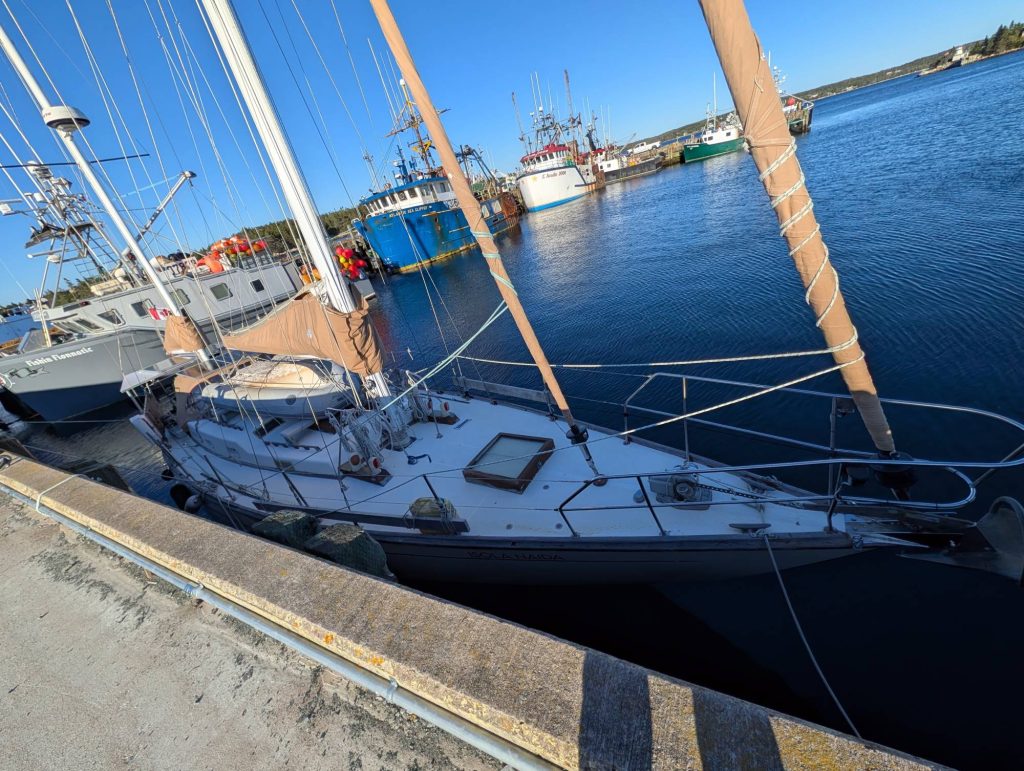
    Conditions were far more favourable than they had been three days earlier. Although only a few knots of wind were blowing at the wharf, there was enough breeze to hoist the mainsail and partially unfurl the jib before casting off.

    We sailed on a beam reach around Bull Point before hardening up onto a close-hauled course. The wind increased as we approached the mouth of the harbour and rounded Inner Sambro Island. Isola Naida settled comfortably onto her lines in roughly 20 knots of breeze before we eased sheets and began the downwind leg toward Chebucto Head.

    After rounding Chebucto Head, the wind gradually faded. By the time we were abeam of Bear Cove, we were nearly adrift, making barely more than a knot toward Halifax Harbour.

    As we approached McNabs Island, a black RHIB carrying four individuals dressed head-to-toe in black tactical gear came racing up behind us.

    The approaching vessel turned out to be an RCMP patrol craft.

    Concerned that we might be in distress, they came alongside to check on us. After assuring them that we were simply enjoying a leisurely sail and required no assistance, they continued on their way into the harbour.

    The breeze returned as we approached the mouth of the Northwest Arm, allowing us to maintain roughly four knots all the way from the north end of McNabs Island to the MacKay Bridge.

    As we entered Bedford Basin, temperatures climbed above 25°C and the wind once again disappeared. We drifted slowly toward Navy Island and contacted the Dartmouth Yacht Club fuel dock on Channel 68. They assigned us a temporary slip near the opening of the breakwater.

    As we rounded Navy Island, we decided it would be prudent to start the engine and make our final approach under power. Winds around the club were barely reaching one knot, and we had little desire to drift among moorings, shorelines, and rocks.

    Then the engine sputtered out once again.

    A quick assessment of the situation revealed that we still had roughly three knots of speed over ground and approximately 300 metres to go. With the mainsail hoisted and just enough breeze to maintain steerage, we concluded that we could probably drift all the way into the slip.

    And drift we did.

    Maintaining just enough headway for the rudder to remain effective, we glided toward the dock and tossed lines to the waiting yard manager. The boat was secured moments before contacting the docks ahead of us.

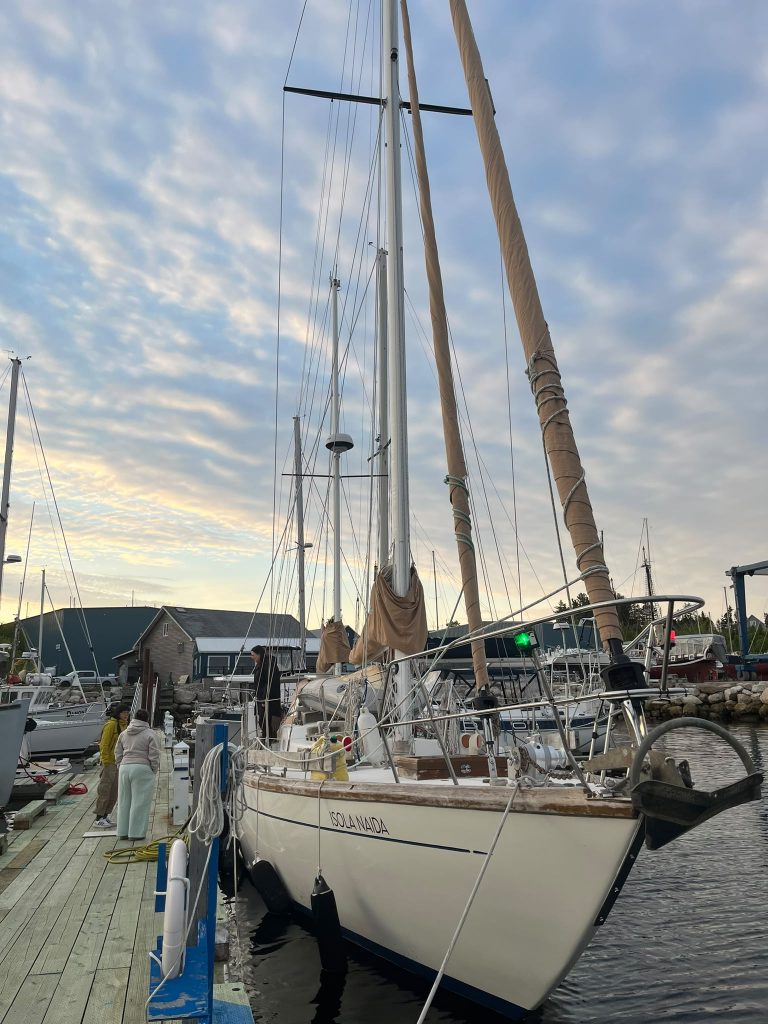
    With that, our delivery voyage was complete and Isola Naida had finally arrived at Dartmouth Yacht Club.

    We packed up our gear and headed back toward the gates before making the drive to Sambro to retrieve the Jeep and return it to Halifax.

    Now that Isola Naida is in the city, we will be able to spend considerably more time aboard this summer and continue the work required to return her to full operational condition.

    We are looking forward to receiving our mooring assignment and exploring Bedford Basin, Halifax Harbour, and the Northwest Arm throughout the season. Be sure to follow along on Instagram and Facebook, and check back for more updates as the summer sailing season continues.
  • Sunny Weekends Are For Sailing

    Sunny Weekends Are For Sailing

    This past week the MC4 connectors for the solar panels arrived, D’Arcy taught sailing to new Canadians, and we took Isola Naida out for a day sail around Mahone Bay!

    Solar Panel Back Online

    The MC4 connectors for the solar panels arrived from Amazon on Thursday. On Friday evening, D’Arcy was onboard repairing the connection to the starboard bimini solar panel. It took some coaxing to get enough slack on the wire to make the repair – there was plenty of wire in the aft compartment, but with so many zip-ties securing bundles through the cockpit lockers and about the pushpit rails, freeing enough to work with it took some effort.

    Disconnecting the old connectors showed just how corroded the wires had become. A full re-wire will likely be necessary in the future. After stripping the wires back and inch, crimping on the MC4 inner connector and enclosing it in the outer housing was straightforward in theory, but finicky in practice – especially when working over the stern of the boat.

    Once everything was reassembled, seeing the MPPT change from “Off” to “Float” was a huge relief. We had connectivity again! By then, the sun was too low for the system to register wattage, so we’d have to wait until Sunday to see how the panel performed.

    Broader Reach

    The Armdale Yacht Club Sailing School offers a program called Broader Reach in partnership with the YMCA Halifax & Dartmouth and the Centre for Immigrant Programs. It’s designed to introduce recent immigrants to Canada to the sport of sailing and the community that surrounds it. Many graduates stick around and crew in Wednesday and Thursday evening races.

    This weekend, the head of the sailing school reached out to the club’s race-crewing chat seeking an extra instructor. D’Arcy volunteered.

    The day started at 10:00 with a quick classroom session on tacking, followed by rigging Solings. Three students joined an instructor in each boat, while the rest rotated through a RHIB on the water.

    For a few hours, we ran laps in front of the club, giving students a chance to practice tacking, pointing, and getting a feel for how the Soling handles. At 13:00, we returned for lunch, followed by another classroom session covering points of sail, gybing, and reading the wind. Some students asked advanced questions, so we took a detour into sailing physics — how sail shape affects speed, how the jib and main work together, and how the keel factors in.

    Back on the water, we practiced gybing. Toward the end, the students with the advanced questions joined my boat. They were handling the Soling well, so I showed them how to trim sails for more speed. Soon, we caught a good breeze across the mooring field and had the Soling heeling over, giving them their first taste of hiking out over the side.

    By 15:30, we were back at the dock, de-rigging for the day. The students asked if I’d be back next weekend — sadly, I wouldn’t — but I suspect I may have encouraged a few future Wednesday night race crew members.

    Day Sail

    On Sunday, we finally made it out for a long-awaited day sail aboard Isola Naida. Having missed the chance last weekend, this time we came aboard with one mission: sail.

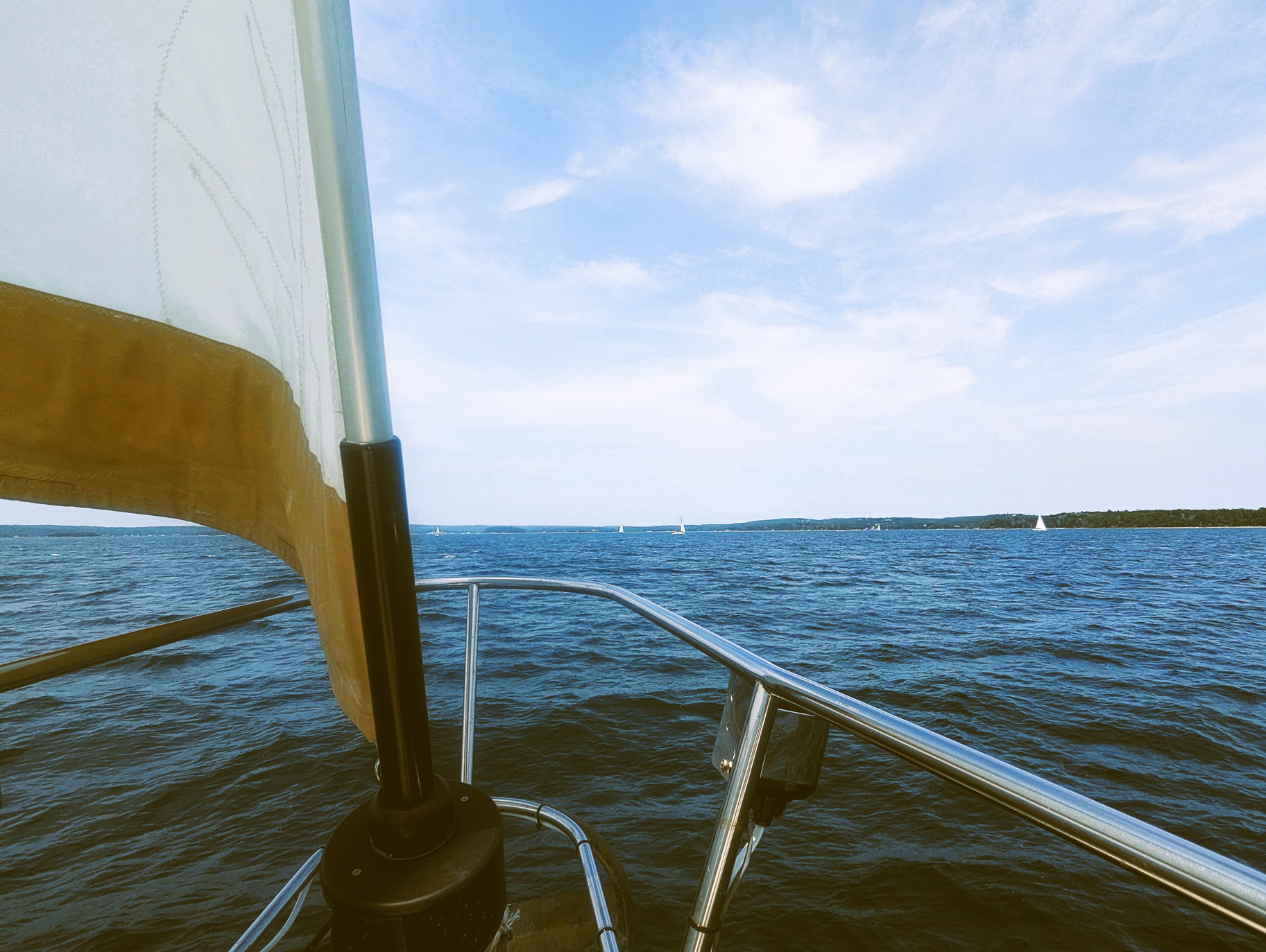
    We departed the marina with the winds blowing out of the south – perfect for hoisting sails without needing to alter course. The main went up slowly but smoothly. Once set, we shut off the engine and watched as we recorded 1.6 kts in 6 kts of wind. With the jib unfurled and mizzen hoisted, we passed 4 kts as the breeze picked up to the 8 kts. A pod of harbour porpoises joined us briefly, clearly enjoying a rich hunting ground.

    As we approached Frog Island, our speed climbed over 5 kts. We decided to drop the main and try a jib-and-jigger setup. as we rounded the island the winds strengthened and with this configuration we comfortably sailed at 6.5 kts in 13 – 16kts of wind. We sailed across Mahone Bay for a while before tacking around to make our way back toward the marina.

    The downwind leg toward the marina was leisurely. Noelle read in the cockpit while D’Arcy monitored the autohelm and passing traffic. As we approached the marina, we dropped the mizzen, furled the jib, and started the engine.

    Our mooring is on the northern edge of the mooring field, close to the shore. In a southerly wind, making the approach to the mooring ball can be tricky – the shallow water and nearby moored boats leave little room to manoeuvre. Instead of threading between them and the shoreline, we looped through the mooring field, made a sharp turn to starboard onto the ball, and gave a quick burst in reverse to avoid overshooting the bridles. This route worked out well and we came to a stop with the bow of the boat nearly directly over the mooring ball.

    This Is Why We Do This

    This weekend was one that reminded us why we love sailing – a satisfying boat repair, the joy of introducing new sailors to the sport, and a day on the water that gave us both speed and serenity. Isola Naida sailed beautifully, the solar panel is charging again, and we met some great people along the way.

    We’ve shared a few video highlights from the sail, but there’s always more happening behind the scenes. If you enjoyed this little window into our weekend, follow along on Instagram, YouTube, or Facebook for more sailing adventures, boat projects, and life afloat. Fair winds until next time!

  • Solar Woes and Shaking Out the Sails

    Solar Woes and Shaking Out the Sails

    The goal this week was to get Isola Naida off her mooring ball and get a feel for how she handles under power and sail. We invited our friends Charles and Roxy aboard to join us on the inaugural adventure.

    Solar vs Refrigerator

    When we arrived on Isola Naida Friday evening we decided to power on the refrigerator system to monitor the energy consumption throughout the weekend. Neither of us are very familiar with solar panel setups, so we are getting a feel for how much energy our 600 watt solar setup can recover, and on the other side of the equation, get a feeling for how much energy devices onboard use when operating.

    On Saturday morning, as the sun rose high enough to start feeding the solar panels, D’Arcy watched the system begin to generate power; but noticed one of our larger charge controllers connected to a 200W panel was show a status of “Off”. At first, we put this down to shade coverage on the panel, but as the sun climbed higher, the issue persisted.

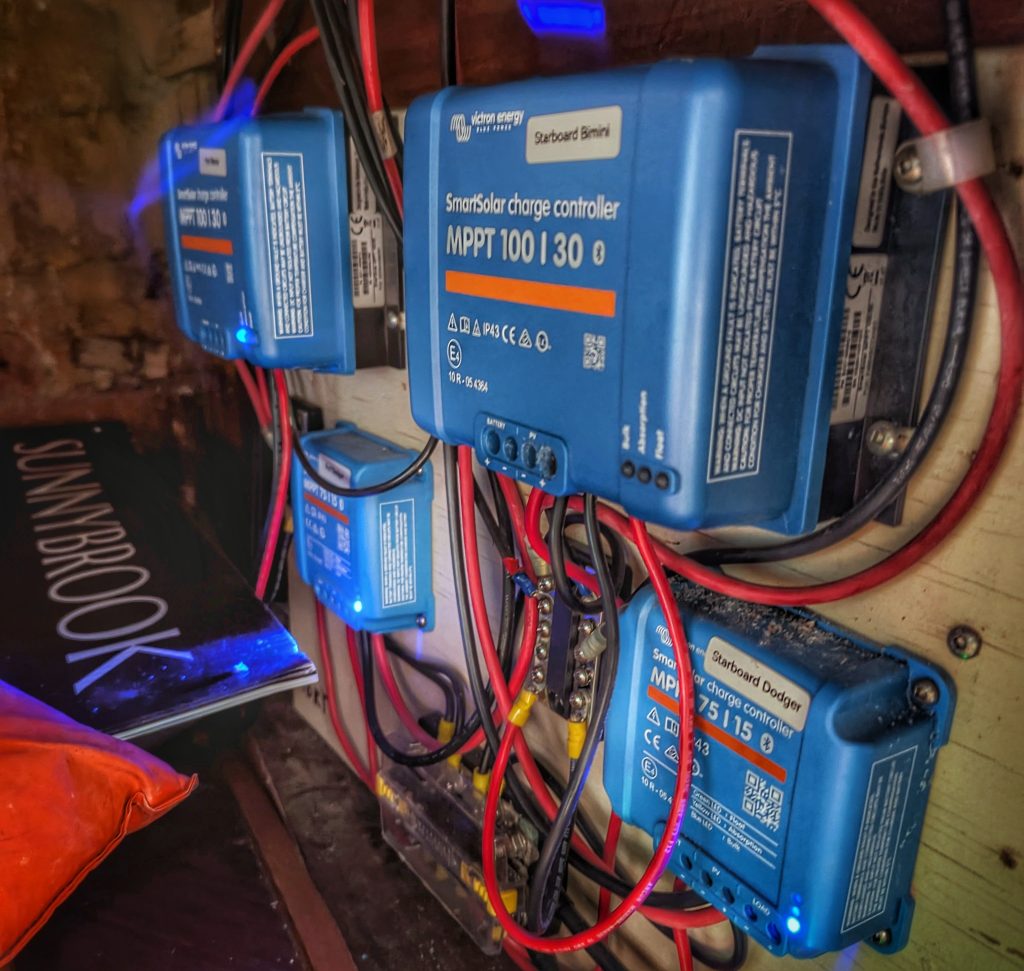
    Our Starboard Bimini Victron SmartSolar Charge Controller MPPT 100 | 30 appears to be the issue.

    D’Arcy checked the connections from the panel to the MPPT charge controller, and from the MPPT to the bus bar. Everything looked fine, except one wire connecting the panel to the MPPT was slightly oversized for the connection port which, combined with some weathering on the contact, made it difficult for the wire to fit snugly into the connection port. We suspect this may be the culprit, but he wasn’t able to seat it any better, and couldn’t get the device to start charging again. Since we have 400W of panels working across three other charge controllers, we decided to put this off until later in the week when I’d have more time to troubleshoot the issue.

    Guests Arrive

    Our friends, Charles and Roxy, arrived at the marina around 11:45. Charles and D’Arcy sailed and deployed together in the Navy and have been close ever since. They work well together, and we knew that if we needed a hand with anything, they could easily communicate what needed to be done; a huge positive when things get busy aboard. Noelle made halloumi cheese tacos with pineapple – a tasty, light meal perfect before casting off. After our meal we decided it was as good a time as any to start up the motor and get off the mooring ball.

    D’Arcy ran through the checklist, double checked that all of our electronics were powered up and that the engine cooling seacock was in the open position. After a quick departure briefing, he took the helm, Charles was on the mooring lines, and Noelle was helping us to communicate. We dropped the lines, gave a quick shot in reverse to ensure we kept clear of the lines and dinghy, then turned to port to make our way out of the mooring field.

    We motored south for a few minutes before deciding to raise sail. With winds were blowing from the north-northwest, we headed upwind to assist in hoisting the main. Our inexperience made it more difficult that it should have been. Lines that should have been running free were, at times, left cleated on, the batons became caught on the lazy jacks as the winds shifted, and the weight of the sail was more than others we were familiar with. Noelle took the helm so that D’Arcy could head forward to help manage halyard tension. We eventually got the mainsail up, then began rounding downwind to unfurl the jib. Once both the main and jib were flying, we cut the engine and raised the mizzen.

    After our struggle, it felt liberating to relax with full canvas up, coasting downwind. We were making 3-5 knots in 8-10kts of breeze. As Frog Island lay off our starboard beam, Noelle and Roxy spotted something in the water off our starboard quarter – a pair of Harbour Porpoises! We were so caught up in the moment that we forgot to take photos. They breached several times before diving beneath the keel, and we could clearly see them beneath the water’s surface.

    A Gusty Return

    We continued sailing south and rounded Birch Island, where Roxy spotted the Quaker Island Lighthouse off to the east. Sitting on (appropriately named) Quaker Island, the lighthouse marks the entrance to Chester, Nova Scotia. We altered course to get a better look, sailing across Mahone Bay toward it.

    As we passed the island, the wind picked up — gusts reaching 19 knots from the north. Isola Naida heeled over for the first time, just enough to send something tumbling in the salon. But she held her line well, and we were all impressed with her performance.

    As we made our way between Saddle Island and Snake Island, the gusts became more sustained. Not wanting to push the boat, ourselves, or our guests any further than we already had — and with the afternoon slipping away — we decided to head back. Charles and Roxy still had a drive ahead of them.

    Crossing back south of Birch Island, we considered the upwind leg that awaited us and whether our crew (and current experience level) could handle it smoothly. We decided not to tempt fate. We pointed upwind, dropped sails, and motored back to the marina.

    A Relaxing Evening

    Re-entering the mooring field was uneventful, helped by the fact that many boats between us and the outer edge were out sailing. With a clear approach, we made the pickup smoothly. After securing lines and powering everything down, we settled into the cockpit for some drinks and snacks to cap off the trip.

    We didn’t expect our first day out on Isola Naida to be smooth and mistake-free—and it wasn’t. But despite a few operational hiccoughs, we had a successful first sail and were grateful to share it with good friends.